Health

How Replacing Your Midday Desk Lunch With a Twenty-Minute Away-From-Screen Meal Break Changes Digestion, Afternoon Focus, and End-of-Day Fatigue Over Several Weeks
Eating lunch at your desk while managing your inbox is a habit that feels efficient but quietly drains your digestion, afternoon focus, and end-of-day energy. A simple twenty-minute screen-free break at midday changes more than you'd expect over several weeks.
By Emily Rodriguez | Sep 07, 2026

How Replacing Your Pre-Workout Caffeine Habit With a Structured Warm-Up Protocol Affects Performance Consistency and Post-Session Recovery Across Several Weeks
Replacing pre-workout caffeine with a structured warm-up protocol changes more than just your morning routine — it reshapes performance consistency and recovery quality over several weeks in ways that compound quietly but meaningfully.
By Emily Rodriguez | Sep 04, 2026

How Introducing a Weekly Fasting Window of Fourteen Hours Overnight Rather Than Restricting Daytime Meals Affects Morning Energy and Metabolic Rhythm
Extending the overnight gap between dinner and breakfast to fourteen hours supports the body's natural metabolic and hormonal rhythms in ways that daytime meal restriction doesn't. Here's how the timing works and what it means for morning energy.
By Emily Rodriguez | Sep 01, 2026

How Eating Leafy Greens at Lunch Rather Than Dinner Changes How Your Body Absorbs Iron and Sustains Afternoon Energy
Eating leafy greens at lunch rather than dinner takes advantage of stronger midday stomach acid and natural food pairings that significantly improve non-heme iron absorption and help sustain energy through the afternoon.
By Emily Rodriguez | Aug 29, 2026

How Introducing a Ten-Minute Wind-Down Breathing Practice Between Dinner and the Rest of Your Evening Measurably Lowers Resting Heart Rate Before Bed
A ten-minute breathing practice placed after dinner works with the body's natural post-meal downshift to measurably lower resting heart rate before bed. Practiced consistently, the effects compound into deeper sleep and better overnight recovery.
By Robert Kim | Aug 26, 2026

Why Adding a Ten-Minute Wind-Down Walk After Your Evening Meal Has a Measurable Effect on Overnight Recovery Quality and Next-Morning Readiness
A ten-minute walk after dinner does more than aid digestion — it stabilizes blood sugar, supports deeper sleep, and creates the physiological conditions for genuine next-morning readiness.
By Emily Rodriguez | Aug 23, 2026
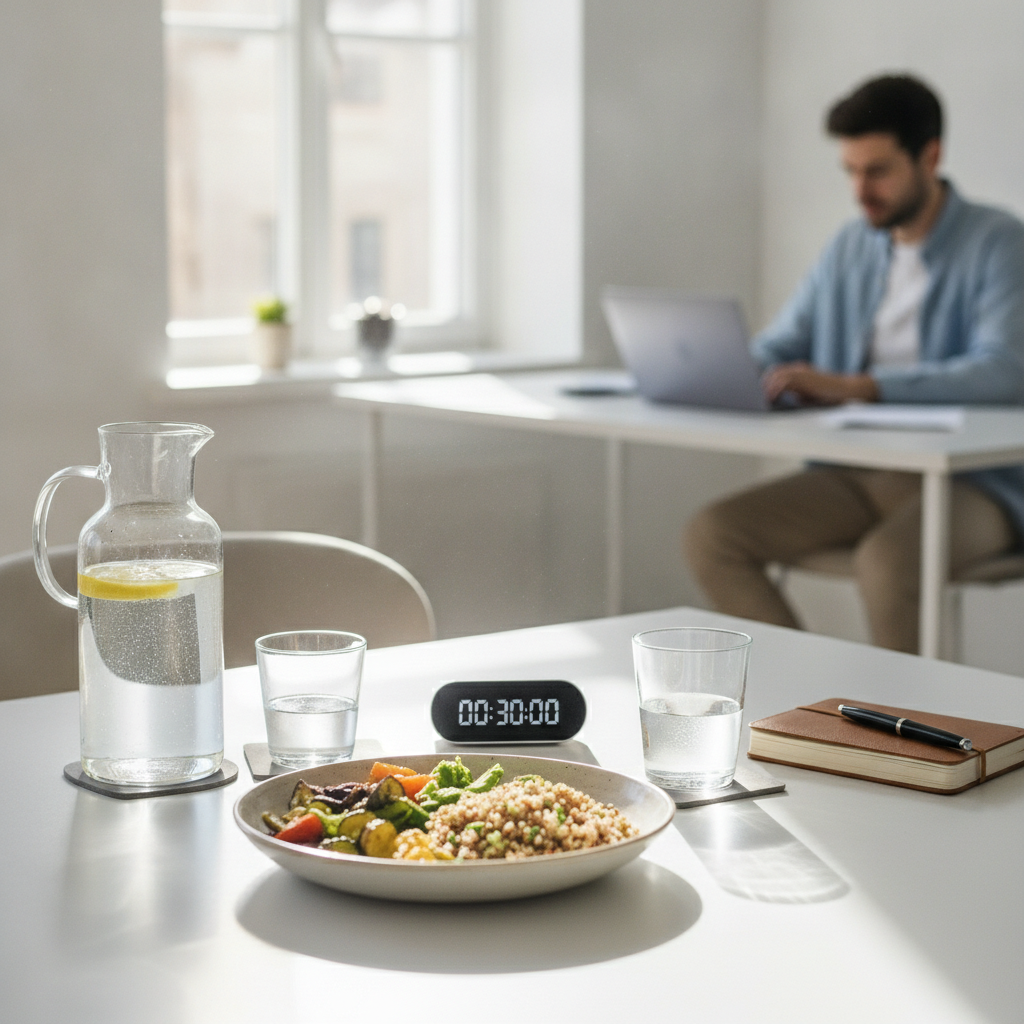
How Structuring Your Hydration Around Meal Timing Rather Than Thirst Cues Affects Digestion and Afternoon Cognitive Clarity
Drinking water only when you feel thirsty means your digestion and concentration are already working at a disadvantage. Here's how timing your hydration around meals creates steadier energy and clearer afternoons.
By Emily Rodriguez | Aug 20, 2026

How Adjusting Your Walking Pace Deliberately During a Thirty-Minute Daily Walk Produces Greater Cardiovascular Benefit Than Maintaining a Single Steady Speed
Varying your walking pace during a thirty-minute daily walk triggers a stronger cardiovascular response than maintaining a steady speed. Here's how to structure your intervals to get the most from every session.
By Emily Rodriguez | Aug 17, 2026

How Incorporating One Fermented Food Into Your Daily Meals Over Six Weeks Gradually Shifts Digestive Consistency and Bloating Patterns
Adding a single fermented food to your daily meals can gradually shift digestive consistency and bloating patterns over six weeks — here's what drives that change and how to make it stick.
By Emily Rodriguez | Aug 13, 2026

How Adding a Short Mobility Sequence Immediately After Waking Reduces the Stiffness That Compounds Into Chronic Discomfort Over Sedentary Workdays
A short mobility sequence done right after waking can interrupt the cycle of stiffness before it compounds into chronic discomfort across a sedentary workday. Here's how to build one that actually works.
By Emily Rodriguez | Aug 10, 2026

How Shifting Your Largest Meal to Midday Instead of Evening Affects Digestion, Sleep Quality, and Morning Appetite Over Several Weeks
Shifting the largest meal of the day to midday rather than evening aligns eating patterns with the body's natural digestive rhythm, with measurable effects on digestion, sleep quality, and morning appetite over time.
By Emily Rodriguez | Aug 07, 2026

Why Shifting Your Largest Meal to Midday Instead of Evening Has a Measurable Effect on Digestion Quality and Sleep Depth
Moving the day's largest meal to midday instead of evening aligns food intake with the body's natural digestive peak, reducing gut strain and improving sleep depth at night.
By Emily Rodriguez | Aug 03, 2026

How Spending at Least Twenty Minutes Outside Before Noon Regulates Cortisol Rhythm and Afternoon Energy Levels
Spending at least twenty minutes outside before noon does more than clear the head — it plays a direct role in anchoring the body's cortisol rhythm, with measurable effects on energy and focus through the afternoon.
By Emily Rodriguez | Jul 31, 2026

How Spending at Least Twenty Minutes Outside in the Morning Without Sunglasses Anchors Your Circadian Rhythm for the Rest of the Day
Getting outside for at least twenty minutes each morning without sunglasses sends a powerful signal to your brain's master clock — one that shapes your energy, focus, and sleep quality for the entire day.
By David Park | Jul 27, 2026

How Tracking Hunger Levels Before Each Meal Instead of Calories Builds a More Sustainable Relationship With Food
Tracking hunger levels before each meal rather than counting calories offers a more durable path to healthy eating by reconnecting people with the body's own appetite signals. This shift in focus tends to reduce food-related stress and build habits that last.
By Emily Rodriguez | Jul 24, 2026

Why the Order in Which You Eat Food Groups During a Meal Has a Measurable Effect on Blood Sugar Response
The sequence in which different food groups are eaten during a meal has a measurable effect on blood sugar response. Understanding the science behind eating order offers a practical, low-effort approach to better metabolic health.
By Robert Kim | Jul 21, 2026

How Scheduling Two Deliberate Rest Days Per Week Around Workout Intensity Actually Accelerates Rather Than Slows Progress
Scheduling two deliberate rest days per week around workout intensity isn't a sign of doing less — it's one of the most effective strategies for building strength, avoiding injury, and sustaining long-term fitness progress.
By Emily Rodriguez | Jul 18, 2026

Why Strength Training Twice a Week Is Enough to Produce Meaningful Muscle and Metabolic Gains
Two strength training sessions per week are enough to build meaningful muscle and improve metabolic health for most adults. Here's what the science says about why frequency matters less than most people assume.
By Emily Rodriguez | Jul 15, 2026

How Eating Protein Within the First Hour of Waking Affects Energy Stability Through the Rest of the Morning
What you eat in the first hour after waking shapes your blood sugar, cortisol response, and energy levels well into mid-morning. Here's how to use protein strategically to stay focused and stable.
By David Park | Jul 12, 2026

How Zone 2 Cardio Training Builds Aerobic Fitness Without Leaving You Too Depleted to Function
Zone 2 cardio training builds deep aerobic fitness by working at a moderate, sustainable intensity that strengthens the metabolic system without draining the body's recovery resources.
By Amanda Foster | Jul 09, 2026

Why Eating the Same Breakfast Every Day Reduces Decision Fatigue Before Noon
Choosing the same breakfast every morning may seem like a small habit, but it quietly reduces decision fatigue and preserves mental clarity for the hours that matter most.
By Emily Rodriguez | Jul 01, 2026

How Evening Light Exposure in the Last Hour Before Bed Disrupts Your Sleep Architecture
The final hour before bed may feel unremarkable, but light exposure during that window can significantly disrupt sleep architecture by delaying melatonin production and altering the brain's overnight restorative cycles.
By David Park | Jun 29, 2026

Nature Therapy: How the Outdoors Improves Mental Health
By Ethan Sawyer | Mar 12, 2026

Digital Detox: How to Reconnect With Life Beyond the Screen
By Lena Grant | Feb 20, 2026

Simple Daily Habits to Cut Back on Screen Time
By Lila Rose | Oct 17, 2025

The Link Between Too Much Screen Time and Poor Sleep
By Tessa Taylor | Oct 17, 2025

Outdoor Hobbies That Keep You Active and Off Your Devices
By Scarlett Brooks | Oct 17, 2025

Mindful Tech Use: Finding Balance in a Digital World
By Sage Flynn | Oct 17, 2025

The Benefits of Outdoor Time for Mental Clarity and Focus
By Maeve Kennedy | Oct 17, 2025