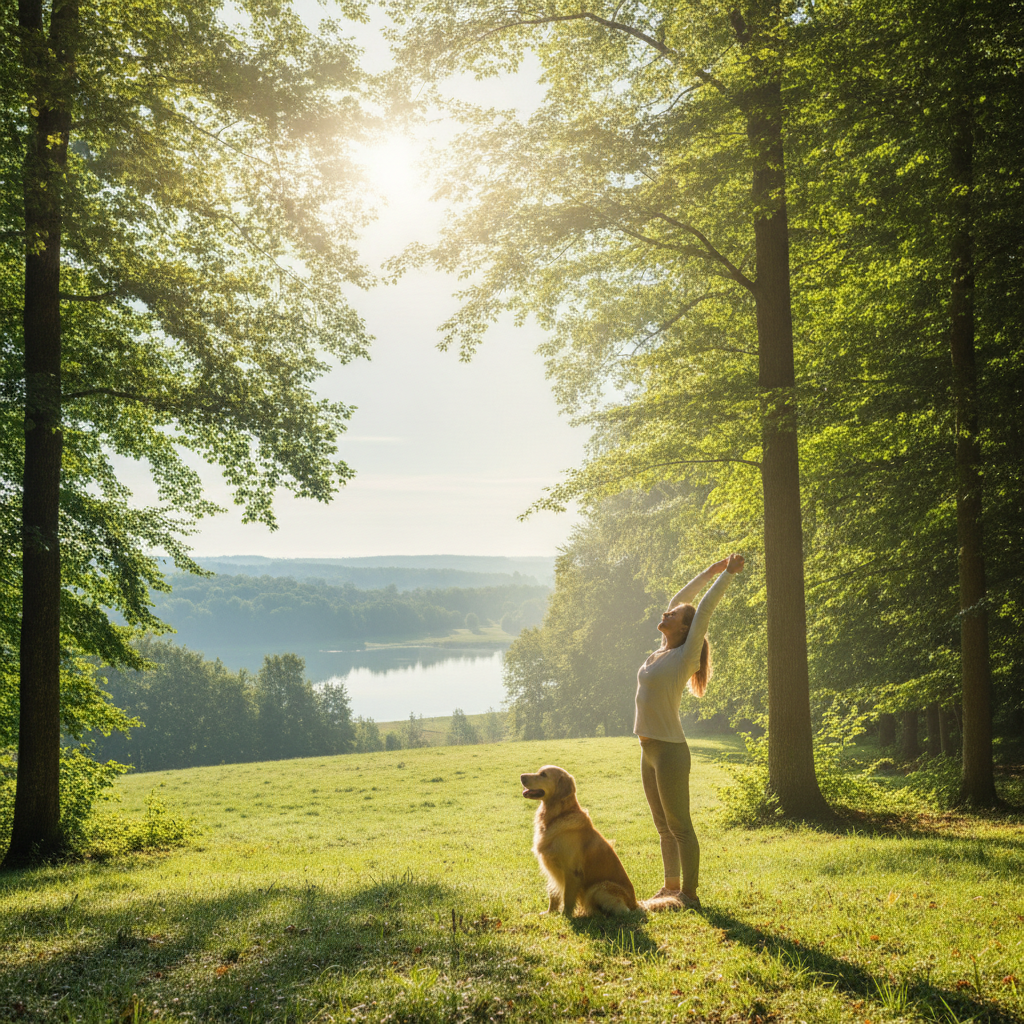
The human body is not designed to wake up indoors and stay there. From the first moments of daylight, a cascade of hormonal signals is set in motion — signals that depend heavily on environmental cues, particularly light and air, to unfold in the right sequence. When those cues are absent or delayed, the downstream effects can be surprisingly significant, shaping everything from midday focus to late-afternoon fatigue.
The Cortisol Awakening Response and Why Timing Matters
Cortisol is often cast as a stress hormone, but that framing misses much of the picture. In healthy physiology, cortisol follows a predictable daily arc that begins with what researchers call the cortisol awakening response — a sharp natural rise in the first thirty to forty-five minutes after waking. This surge is the body's internal ignition system. It sharpens alertness, mobilizes energy, and primes the immune system for the demands of the day. The catch is that this response is sensitive to context. Light exposure, particularly natural outdoor light, acts as a powerful amplifier of that morning peak.
What Natural Light Does That Indoor Light Cannot
Standard indoor lighting, even in well-lit offices, delivers a fraction of the light intensity found outside on an overcast day. The difference is measured in lux, and it's dramatic. A bright indoor environment might register around 500 lux; stepping outside on a cloudy morning can easily exceed 10,000 lux. This intensity matters because the retinal cells responsible for communicating with the brain's master clock — the suprachiasmatic nucleus — are calibrated for that outdoor range. Apps like Visible Body or health tracking platforms within the Apple Health ecosystem can log habits, but they can't replicate what a genuine outdoor environment provides in terms of light signal strength.
How Cortisol Rhythm Shapes Afternoon Performance
When the morning cortisol peak is well-supported, the rest of the day's hormonal rhythm tends to follow a cleaner arc. Cortisol declines gradually through the afternoon, reaching its natural low point in the evening — which is precisely what allows melatonin to rise and sleep to follow naturally. When the morning peak is blunted, however, the rhythm becomes irregular. Some people experience a sharper-than-expected energy dip between 2 and 4 p.m., a window that coincides with cortisol's natural descent. That afternoon slump isn't inevitable; in many cases, it's a downstream consequence of a poorly anchored morning.
The Role of Movement and Temperature Outdoors
Light is the primary driver, but it isn't the only factor at play during outdoor morning time. Cooler morning air temperatures activate mild thermogenic responses in the body, which can complement cortisol's alerting effects. Light physical movement — even an unhurried walk through a neighborhood like Portland's Irvington district or a quiet park path — adds a layer of physiological activation that indoor stretching rarely matches. The combination of sensory input from an outdoor environment, including variable light angles, ambient sound, and slight temperature variation, creates a richer stimulus than any controlled indoor setting can replicate.
Consistency Matters More Than Intensity
One of the more practical insights from chronobiology is that regularity tends to outperform intensity when it comes to anchoring biological rhythms. Twenty minutes of outdoor time before noon, done consistently across most days of the week, is more effective at stabilizing cortisol patterns than a single long outdoor session on weekends. The body's circadian system is fundamentally a timing system — it responds to predictable cues delivered at predictable intervals. Fitness platforms like Whoop and Oura track recovery and readiness scores that often reflect, indirectly, how well a person's cortisol rhythm is functioning day to day.
Making the Habit Work Across Different Schedules
For people with demanding morning schedules, the idea of carving out outdoor time before noon can feel ambitious. But the threshold is lower than most assume. You don't need a structured workout or a long walk to capture the physiological benefit. Drinking coffee on a balcony, walking to a nearby errand, or simply standing outside during a brief break between tasks can all qualify. The key variables are timing — before noon — and duration — at least twenty minutes of genuine outdoor exposure. If you work from home, positioning a morning work call near an open window or stepping outside before the first meeting of the day creates a consistent anchor without overhauling a schedule.
As wearable technology continues to improve its ability to track hormonal proxies and recovery markers, the relationship between morning outdoor habits and afternoon performance is likely to come into sharper focus for everyday users. What was once understood primarily in research settings is gradually becoming visible in the data that people collect on their own wrists. The underlying biology isn't new — but the tools to observe it in real time are, and that visibility tends to change behavior in ways that abstract recommendations rarely do.