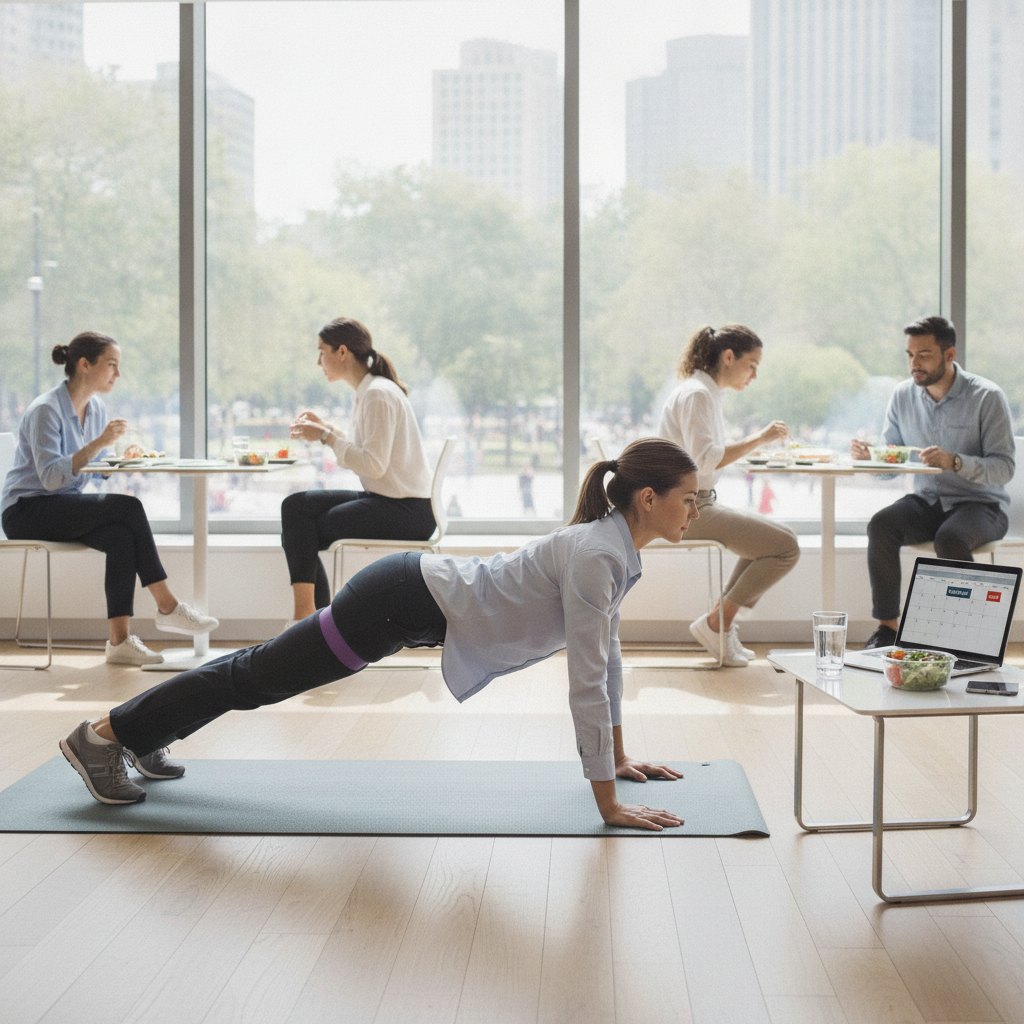
Most people who want to get stronger already know what they should be doing — they just can't figure out where to put it in their day. Morning workouts get pushed aside when sleep runs short. Evening sessions get cancelled when work runs long. The gym feels like a separate expedition that requires planning, commuting, and a block of time that never seems to materialize. What often gets overlooked is the lunch break: a window that already exists, repeats itself five days a week, and asks very little of you beyond showing up.
The Quiet Power of a Midday Movement Window
Lunch breaks carry a structural advantage that morning and evening workouts don't — they're already carved into the workday. You're not stealing time from sleep or sacrificing an evening. A thirty-minute break gives you roughly twenty minutes of actual movement after accounting for a quick change and a few minutes to settle before heading back. Resistance bands make this possible in a way that dumbbells and barbells don't. They pack into a bag, require no equipment rack, and can be used in a conference room, a break room, or even a quiet corner of a hallway without drawing much attention.
Why Three Sessions a Week Hits the Consistency Sweet Spot
Three resistance band sessions per week creates enough frequency to drive real adaptation without triggering the kind of fatigue that causes people to abandon routines after two weeks. Muscle tissue responds to stimulus, and when that stimulus arrives consistently every few days, the body learns to recover and rebuild on a reliable schedule. You're not trying to peak for a competition — you're building a baseline of strength that improves your posture, supports your joints, and makes the physical demands of daily life feel easier. Apps like FitBod and Ladder can generate short, progressive resistance band workouts that fit within a twenty-minute window and scale difficulty as you improve.
Choosing the Right Band Resistance for Where You Are Now
Starting with too much resistance is one of the most common reasons short routines fall apart early. The goal in the first few weeks is to establish the movement patterns — rows, presses, squats, hinges — before adding meaningful load. A light-to-medium band that lets you complete twelve to fifteen clean reps with controlled form is the right starting point for most people. Brands like Serious Steel and Perform Better offer well-graded sets that progress in clear increments, which makes it easier to know when you're ready to move up without guessing. Form degrades when resistance is too high, and poor form during a lunch break workout is a fast route to discomfort that bleeds into the afternoon.
Building a Session Structure That Fits Twenty Minutes
A productive twenty-minute band workout doesn't need to be complicated. Three to four compound movements, two to three sets each, with minimal rest between them is enough to create meaningful muscular stress across your major muscle groups. Pairing a pushing movement with a pulling movement — say, a band chest press followed by a band row — keeps the session dense without leaving you breathless. Finishing with a lower-body movement like a banded squat or Romanian deadlift ensures the session covers the full body across the week. Keeping a simple log in an app like Strong helps you track which movements you did and what resistance you used, which removes the guesswork from the next session.
Managing Energy So Afternoons Stay Productive
One concern people raise about midday workouts is whether they'll feel flat or foggy going back to work. The key is keeping intensity moderate and ending the session with two to three minutes of gentle movement — shoulder rolls, slow hip circles, a few deep breaths — rather than collapsing into a chair immediately. A small protein-forward snack either just before or just after the session helps blunt any post-exercise energy dip. Greek yogurt, a boiled egg, or a handful of edamame are all practical options that require no preparation and take sixty seconds to eat. The goal is to feel alert and slightly warmed through when you return to your desk, not depleted.
Staying the Course Through Busy Weeks
Three sessions a week means you have two built-in days where no workout is expected — and that buffer matters more than it sounds. When a meeting runs long or a deadline compresses the lunch hour, one missed session doesn't break the habit the way it would if you were aiming for five days a week. The routine is resilient by design. Keeping your bands in a desk drawer or your bag means there's no prep barrier on the days when motivation is lower. The less friction between you and starting, the more likely you are to begin — and beginning is always the hardest part.
As more people look for sustainable ways to build physical strength without restructuring their entire schedule, short resistance band routines during existing daily windows are becoming a practical standard rather than a workaround. The tools have improved, the guidance is more accessible, and the evidence for frequent, moderate-load training continues to support this kind of approach. If you've been waiting for the right moment to start, the lunch break you already have is a better foundation than the perfect morning routine you're still planning.