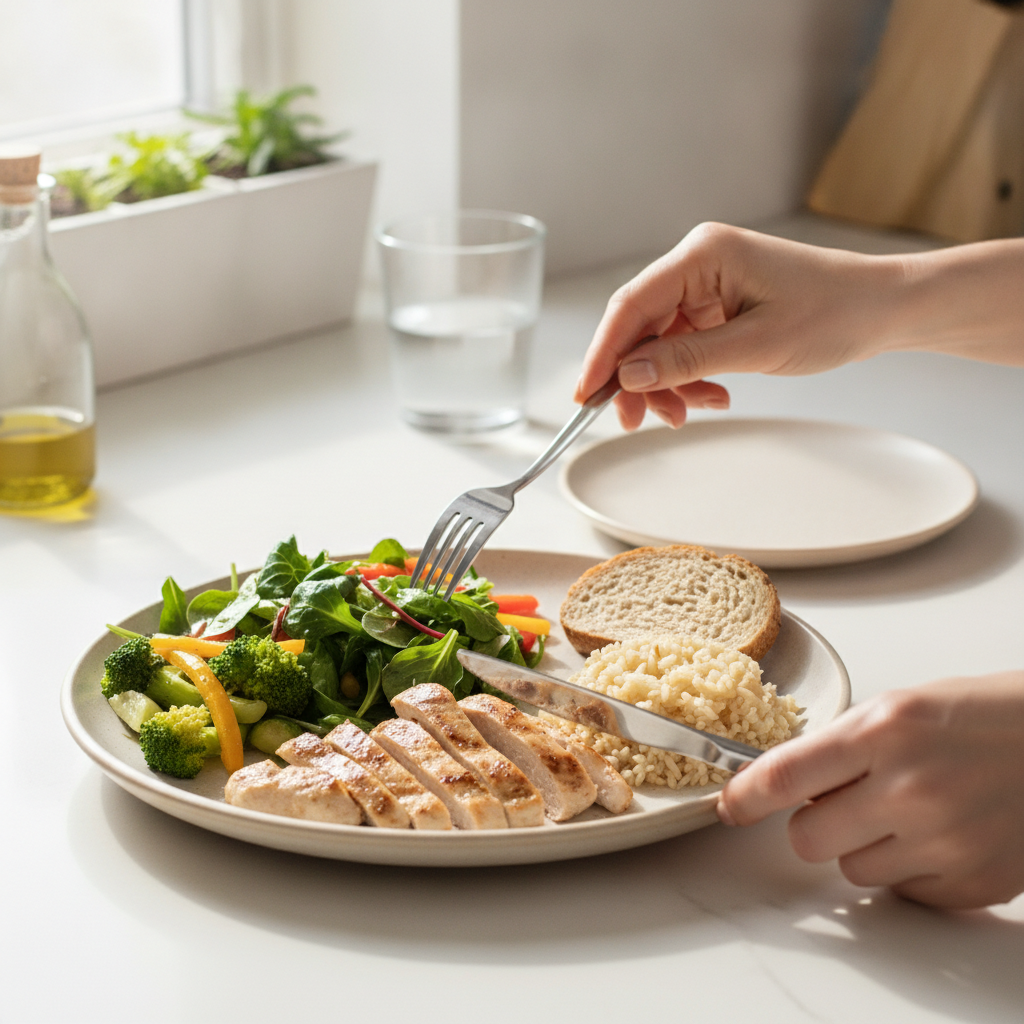
Most people sit down to a meal and eat whatever catches their attention first — a forkful of rice, a bite of bread, maybe a sip of something sweet. The sequence feels entirely random, governed by preference or habit rather than any deliberate strategy. Yet the order in which different food groups enter the digestive system has a genuine, measurable impact on how the body processes glucose, how sharply blood sugar rises, and how quickly it returns to baseline. This isn't a fringe idea; it reflects how digestion actually works at a physiological level, and understanding it can shift the way a person approaches even an ordinary weeknight dinner.
How the Digestive Sequence Shapes Glucose Absorption
When food enters the stomach, it doesn't all get processed at the same rate. Different macronutrients — carbohydrates, proteins, fats, and fiber — behave differently in the gastrointestinal tract, both in terms of digestion speed and the signals they send to the body. Carbohydrates, particularly refined ones like white rice or bread, break down quickly into glucose and move into the bloodstream rapidly. Proteins and fats slow gastric emptying, meaning the stomach releases its contents into the small intestine more gradually. Fiber, found in vegetables and legumes, adds physical bulk and creates a kind of barrier that slows glucose absorption. The sequence in which these elements arrive fundamentally alters how the whole process unfolds.
The Role of Vegetables and Fiber as a First Course
Eating vegetables before the carbohydrate portion of a meal appears to blunt the glucose spike that follows. When fiber-rich foods are consumed first, they begin coating the intestinal lining and forming a kind of physical matrix through which subsequent nutrients must pass. This slows glucose absorption in a meaningful way, reducing the sharpness of the post-meal blood sugar peak. Japanese dietary research has long observed this pattern, and programs like the Okinawa diet tradition naturally emphasize vegetable-forward eating at the start of meals. Even a modest portion of greens, broccoli, or cucumber consumed before rice or bread creates a different metabolic environment than if those vegetables were eaten last or mixed in simultaneously.
Protein and Fat Eaten Before Carbohydrates Slow the Glucose Curve
Beyond vegetables, consuming protein and fat before carbohydrates also appears to moderate the post-meal glucose response. Protein stimulates the release of certain gut hormones, including glucagon-like peptide-1 (GLP-1), which slows gastric emptying and signals the pancreas to prepare for incoming glucose. Fat has a similar gastric-slowing effect. When someone eats a piece of grilled chicken or a handful of almonds before their pasta, the digestive machinery is already primed to process the subsequent carbohydrates more gradually. Brands like Levels, which produce continuous glucose monitors for consumer use, have documented these patterns in everyday eating scenarios, showing measurable differences based purely on the sequence of consumption.
Why Carbohydrates Eaten First Produce a Sharper Spike
The inverse of the above is equally well-supported. When refined carbohydrates are consumed at the very start of a meal — as often happens with bread baskets in restaurants, or rice served alongside soup — they hit the small intestine without the buffering effect of fiber, protein, or fat. Glucose enters the bloodstream quickly and in a concentrated wave, prompting a sharper insulin response. This rapid rise and subsequent drop can contribute to energy crashes, increased hunger within a few hours, and, over time, the kind of metabolic strain associated with poor glycemic control. A meal at a place like The Cheesecake Factory, where the bread arrives before anything else, illustrates exactly this dynamic in practice.
Practical Implications for Everyday Meal Construction
Applying this knowledge doesn't require overhauling a diet or tracking every gram of food. The approach is structural rather than restrictive — a matter of sequencing rather than subtracting. If you're eating a meal that includes vegetables, protein, and a starch, try eating the vegetables first, waiting even a minute or two, then moving to the protein, and finishing with the carbohydrate portion. At a restaurant, you might ask for a side salad before the main course rather than alongside it, or prioritize the protein elements on the plate before the rice or bread. Apps like MyFitnessPal don't currently track eating order, but some health-focused communities are beginning to discuss it as a complement to macronutrient tracking. The changes required are small, practical, and require no special food purchases or preparation changes.
What This Means for Long-Term Metabolic Health
For most healthy people, the occasional meal eaten in any order poses no particular concern. But across hundreds of meals per year, the cumulative effect of repeated blood sugar spikes is worth considering, particularly for those with prediabetes, insulin resistance, or a family history of type 2 diabetes. Research in this area has expanded considerably, and practitioners at institutions like the Joslin Diabetes Center have incorporated meal sequencing concepts into nutritional counseling for at-risk patients. Even for people without a specific diagnosis, moderating post-meal glucose fluctuations is associated with more consistent energy levels, better appetite regulation, and reduced inflammatory signaling over time. It represents a low-effort, evidence-grounded adjustment to a behavior that happens multiple times every single day.
The simple act of reaching for the bread basket first — something almost everyone does without thinking — turns out to be one of the small, compounding choices that shapes metabolic health over years. Eating in a different order doesn't demand discipline or deprivation; it asks only for a slight shift in awareness about how a meal begins. The body responds to sequence in ways that are both measurable and meaningful, which means that one of the most accessible tools for supporting blood sugar balance isn't a supplement or a specialized diet — it's simply the order of the fork.