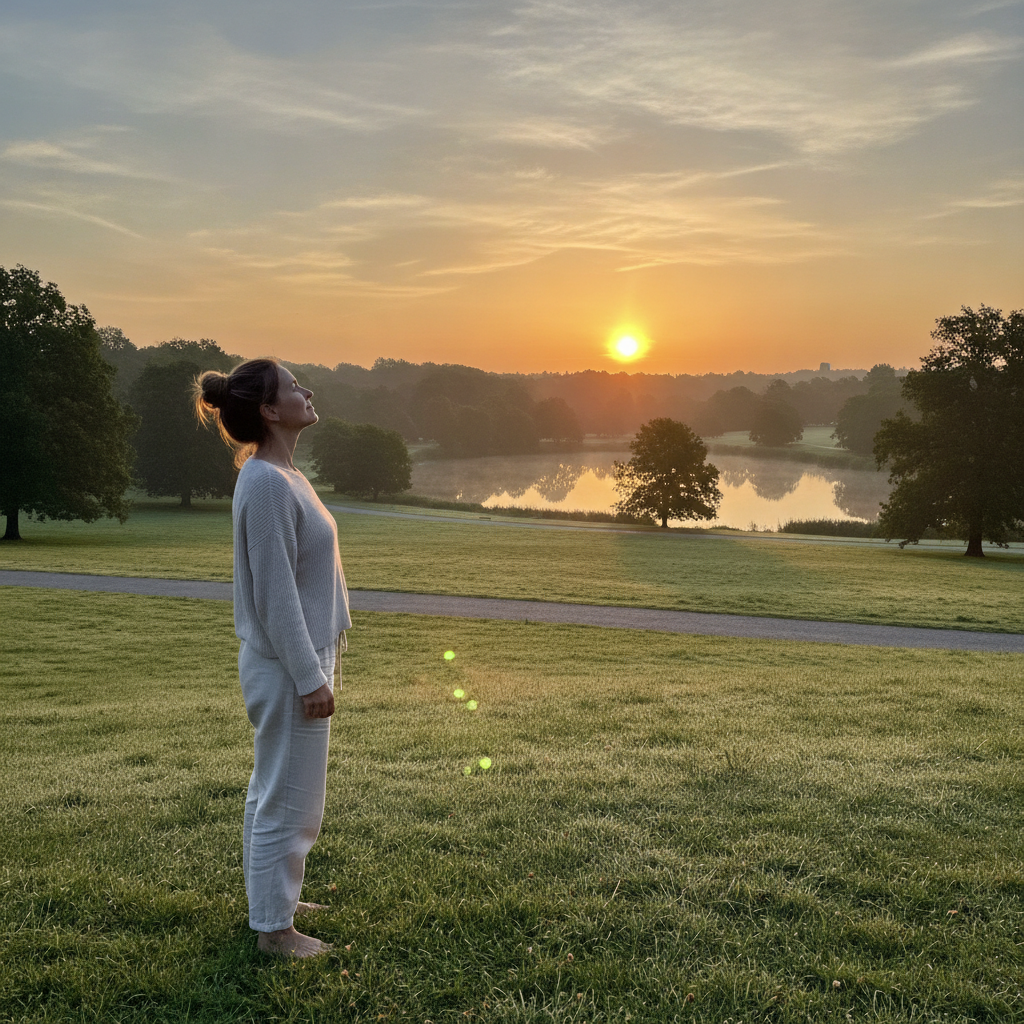
Your body runs on an internal clock that has been calibrated by sunlight for thousands of years, and that clock is still taking its cues from the light that hits your eyes each morning. Most people understand sleep hygiene in a general way — avoid screens late at night, keep a consistent bedtime — but far fewer recognize that the quality of your entire day's energy, mood, and sleep cycle is shaped significantly by what happens in the first hour after you wake up. Getting outside for at least twenty minutes, without sunglasses, turns out to be one of the most effective and underused tools for biological regulation that exists.
Understand How Your Eyes Signal the Brain
The retina contains specialized cells called intrinsically photosensitive retinal ganglion cells, which are particularly sensitive to the blue-spectrum light present in natural morning sunlight. These cells send signals directly to the suprachiasmatic nucleus in the hypothalamus — the brain's master clock. When this signal arrives early in the day, it sets off a cascade: cortisol rises appropriately, melatonin begins its scheduled suppression, and body temperature starts climbing. Without that signal, the clock remains loosely set, and the rest of your biological timing drifts in unpredictable ways throughout the day.
Why the Timing of Light Exposure Actually Matters
Light exposure in the first one to two hours after waking carries far more biological weight than light absorbed later in the day. The master clock is most sensitive to resetting signals during this window. Missing it — or substituting indoor lighting, which is typically many times dimmer than outdoor light even on overcast days — means your cortisol peak arrives late, your alertness takes longer to build, and your melatonin onset that evening may be delayed. The result is that familiar feeling of being groggy in the morning and wired at night, which compounds over days and weeks into chronic fatigue.
Step Outside Even When the Sky Is Overcast
One of the most common misconceptions is that cloudy days make morning light walks pointless. In practice, even heavily overcast outdoor light delivers significantly more photons to the retina than the brightest indoor environments. A well-lit office or kitchen typically registers around 200 to 500 lux. Outdoor light on an overcast morning commonly reaches 10,000 lux or more. Your circadian system responds to that difference meaningfully. You don't need direct sun on your face — you need unfiltered outdoor light reaching your eyes. That's the key distinction, and it changes the math on days when stepping outside feels less appealing.
Leave the Sunglasses Behind for This One Window
Sunglasses are designed to reduce light reaching the retina, which is exactly the opposite of what you want during your morning anchor window. Blocking UV and blue-spectrum light with polarized lenses — even quality ones from brands like Maui Jim or Oakley — significantly reduces the signal your circadian system receives. This doesn't mean sunglasses are harmful in general; they serve an important protective role when light intensity is high or prolonged. It simply means that for the specific purpose of circadian anchoring, keeping them off during your first twenty minutes outside produces a measurably stronger biological response.
Build the Habit Around Something You Already Do
The most effective approach is attaching morning light exposure to an existing routine rather than treating it as a separate task. A walk to a nearby coffee shop, time spent in a backyard or on a balcony with a morning drink, or a short loop through a neighborhood park like Prospect Park in Brooklyn or Balboa Park in San Diego all work equally well. The activity itself is secondary. What matters is that your eyes are receiving outdoor light without a filter for a sustained period. Even standing near a window won't produce the same effect — glass filters out a substantial portion of the relevant light frequencies.
Pair Light Exposure With Physical Movement When Possible
While stationary outdoor time does activate circadian signaling, combining it with light physical movement — walking, stretching, or a gentle jog — adds a secondary layer of benefit. Movement in the morning helps advance the circadian phase, meaning your body clock shifts slightly earlier. This makes falling asleep at a reasonable hour easier and waking up without an alarm more natural over time. Apps like Streaks or a simple habit tracker can help you stay consistent during the first few weeks while the behavior is becoming automatic. Consistency across the week matters more than perfection on any single day.
Recognize the Downstream Effects on Sleep Quality
Morning light exposure doesn't just affect how you feel before noon — it directly influences how well you sleep that night. By setting the cortisol and melatonin timing accurately in the morning, your body knows when to begin winding down in the evening. Melatonin production typically rises about fourteen to sixteen hours after your light anchor, which means a consistent morning habit creates a predictable and appropriately timed sleep onset. People who struggle with falling asleep or who feel tired but wired at bedtime often find that adjusting their morning light exposure — rather than their evening routine alone — produces the most reliable shift.
The broader understanding of circadian biology is continuing to shape how sleep medicine, sports performance, and mental health fields approach daily scheduling. As research into light therapy and chronobiology becomes more accessible to general audiences, morning sunlight exposure is increasingly being recognized not as a wellness trend but as a foundational physiological need. Getting outside early, eyes unshielded, is one of those rare habits that costs nothing and compounds quietly in the background — steadying your energy, sharpening your focus, and making the rest of the day feel a little more like it was supposed to.