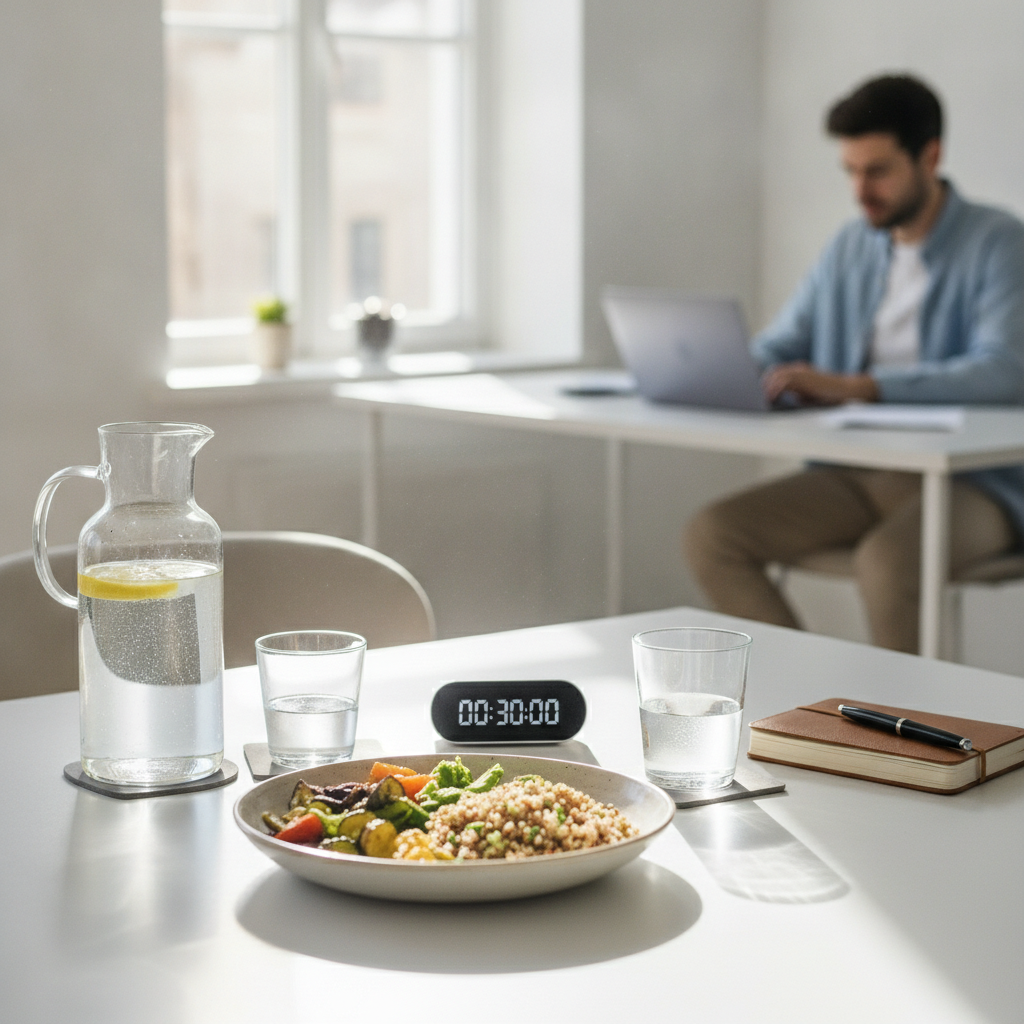
Most people drink water reactively — reaching for a glass only when thirst becomes noticeable. The problem is that thirst is a lagging signal. By the time your brain registers it, your body has already been mildly dehydrated for a while, and both your digestive system and your concentration have quietly begun to underperform. Structuring hydration intentionally around your meals and daily rhythm, rather than waiting for the cue, produces measurably steadier energy and better digestive function throughout the day.
If you regularly hit an afternoon slump around 2 or 3 p.m. and can't quite explain why, hydration timing is worth examining closely. The relationship between water intake, digestive enzyme activity, and brain function is more connected than most people realize — and a few deliberate shifts in when and how much you drink can make a real difference.
Drink a Full Glass Before Each Meal, Not During
Drinking water 20 to 30 minutes before eating prepares the digestive tract without diluting the gastric acids and enzymes your body releases during a meal. When you flood your stomach with water mid-meal, you're essentially thinning the digestive environment, which slows the breakdown of food and can contribute to bloating. A single full glass before sitting down — around 12 to 16 ounces — signals the body to begin the digestive process and keeps things moving efficiently without interfering with enzyme activity.
Front-Load Your Morning Hydration Before Breakfast
After six to eight hours of sleep, the body wakes up in a mild state of fluid deficit. Drinking at least one large glass of water — ideally two — before your morning coffee or breakfast replaces what was lost overnight and activates the gastrocolic reflex, which helps prompt a bowel movement earlier in the day. Apps like WaterMinder or Hydro Coach make it easy to set a morning hydration reminder so this habit becomes automatic rather than something you have to remember.
Taper Off Water Consumption in the 30 Minutes After Eating
The post-meal window is when your digestive system is doing its heaviest lifting. Drinking large amounts of water immediately after finishing a meal can interfere with the stomach's ability to maintain the acidic environment needed for protein digestion. Small sips are fine if you need them, but it's worth waiting about 30 minutes before resuming normal water intake. This simple boundary helps the digestive process reach completion more efficiently and reduces that heavy, sluggish feeling that often follows larger meals.
Use a Midmorning Hydration Window to Sustain Focus
Cognitive performance begins to drop with even mild fluid loss — and for most people, midmorning is when that subtle drop starts to appear. Building a deliberate hydration window between breakfast and lunch, roughly around 10 to 11 a.m., keeps blood volume stable and supports steady delivery of oxygen and nutrients to the brain. This is particularly useful if your work involves sustained attention or decision-making. A refillable bottle like a Hydro Flask kept at your desk serves as a low-effort visual reminder.
Bridge the Afternoon Gap With Consistent Sipping
The period between lunch and dinner is where hydration tends to drop off most sharply, and it's no coincidence that this is also when mental fog and fatigue tend to peak. Rather than drinking a large amount all at once to compensate, spreading intake evenly across the afternoon — roughly every 45 to 60 minutes — maintains steadier fluid levels in the brain and bloodstream. Erratic drinking patterns create spikes and drops in fluid balance that are harder for the body to regulate, particularly during mentally demanding tasks.
Match Your Water Intake to Meal Size and Composition
Higher-sodium meals, meals rich in protein, and larger portions all place greater demands on the kidneys and digestive system, which means your hydration needs shift depending on what you eat. A light salad-based lunch requires different fluid support than a protein-heavy dinner. Getting in the habit of slightly increasing your water intake on days when your meals are heavier or saltier helps the body process those foods more efficiently and reduces next-morning puffiness driven by sodium retention.
Reduce Fluids in the Two Hours Before Bed
Hydration timing matters at the end of the day as much as the beginning. Drinking significant amounts of water in the two hours before sleep increases the likelihood of waking during the night, which fragments sleep architecture and impairs the overnight cognitive restoration process. Completing your hydration intake before this window — and having only small sips if needed after — supports both sleep continuity and the kind of deep rest that keeps afternoon cognitive clarity intact the following day.
Add Electrolytes Strategically, Not Constantly
Plain water isn't always enough on its own, particularly on days involving physical exertion, heat, or high stress. Electrolytes — primarily sodium, potassium, and magnesium — help the body actually retain and use the fluid it receives, rather than cycling it out quickly. Adding a low-sugar electrolyte product like LMNT or Liquid I.V. to one glass of water per day, particularly in the morning or around physical activity, improves cellular hydration more effectively than simply increasing water volume alone.
Timing your water intake around meals and the natural arc of your day is a straightforward shift with compounding benefits. It supports cleaner digestion, reduces the energy drain that comes from forcing an underprepared gut to process food, and keeps the brain supplied with the fluid it needs to sustain focus into the afternoon. Thirst is a useful signal, but it's a backup system — building proactive hydration habits means you're not waiting for the deficit to appear before you address it.