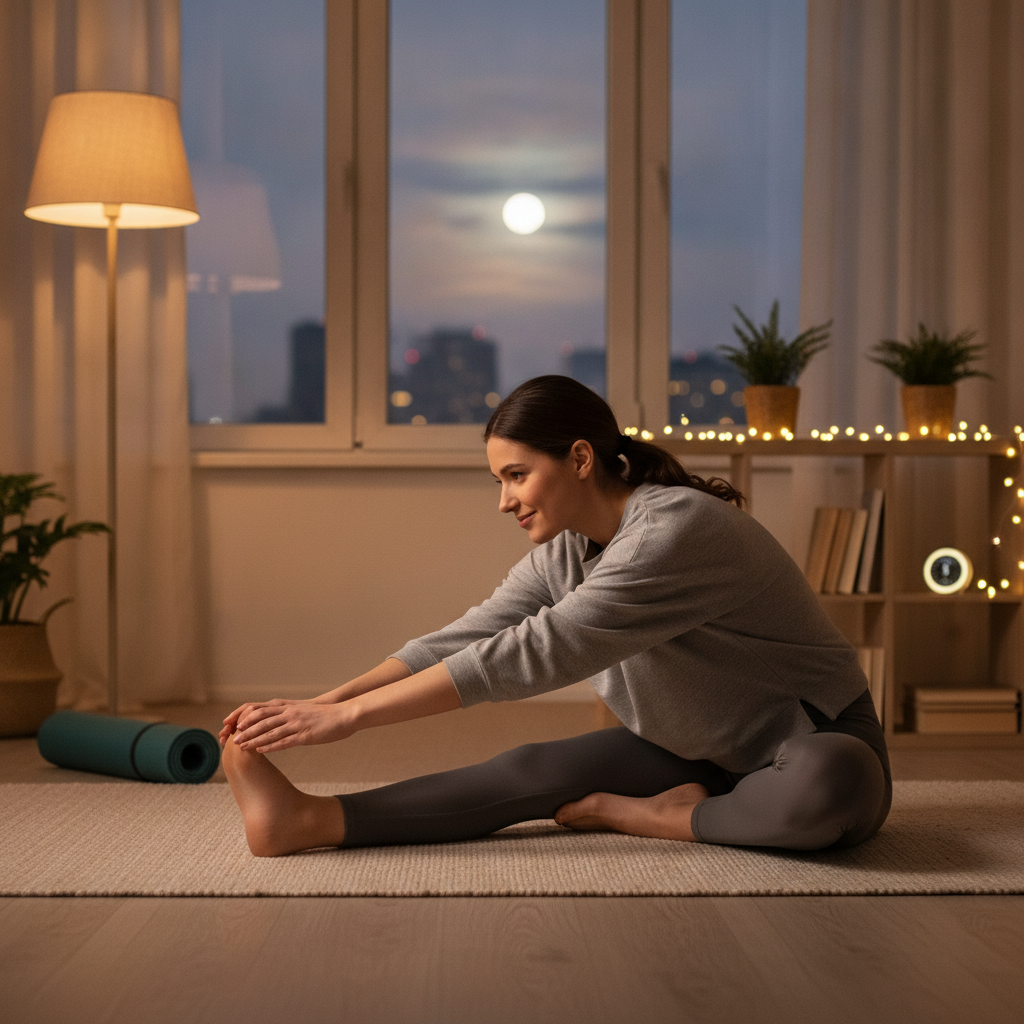
Flexibility is one of those fitness goals that most people approach with good intentions and inconsistent follow-through. You might roll out a mat on a Sunday afternoon, spend forty minutes working through every muscle group, feel genuinely accomplished — and then not stretch again for two weeks. The gains quietly reverse. The stiffness returns. And the cycle restarts. What the body actually responds to isn't heroic effort; it's regularity. A twelve-minute sequence done three evenings a week will, over several months, outperform the occasional marathon session in nearly every measurable way.
Why Does Consistency Beat Duration for Flexibility?
Muscle and connective tissue adapt through repeated, low-threshold exposure rather than through occasional high-intensity effort. When you stretch consistently, your nervous system gradually reduces its protective tension response, allowing your muscles to lengthen over time. A long infrequent session can temporarily increase range of motion, but without reinforcement, the nervous system resets its baseline. Three shorter sessions spread across the week keep the signal active. The tissue doesn't have time to fully tighten back before you return, and that cumulative effect is what produces lasting change.
How Does Evening Timing Affect Stretching Outcomes?
Body temperature peaks in the late afternoon and remains elevated into the early evening, which makes muscles more pliable and joints more receptive to movement. Evening stretching also works with your natural wind-down rhythm — your breathing slows, your nervous system shifts toward a parasympathetic state, and muscular tension that's been accumulating since morning begins to release. Apps like StretchIt and Glo both structure their evening flexibility programs around this window deliberately. Stretching at this time doesn't just feel easier; it tends to produce deeper holds with less discomfort, which makes consistency easier to maintain.
What Happens in the Twelve Minutes That Makes Them Effective?
Twelve minutes is long enough to address the major muscle groups that accumulate the most tension during a typical day — hips, hamstrings, chest, and thoracic spine — without requiring so much time that you start negotiating with yourself about whether to bother. The sequence should move through those four areas in roughly three minutes each, holding each position for between thirty and sixty seconds. This isn't rushed. At a moderate pace, you get two to three meaningful holds per zone. That's enough to create a genuine response in the tissue without tipping into fatigue or soreness that discourages the next session.
Why Does Muscle Memory Apply to Flexibility Training Too?
The phrase muscle memory usually gets applied to motor skills, but something similar happens with flexibility. Your nervous system builds a record of positions you return to regularly, and over time it stops treating those ranges of motion as unfamiliar territory requiring protection. Yoga practitioners who train with a service like Yoga International or a local studio three times a week will often report that their range of motion feels more accessible even on non-training days. That's not imagination — it reflects a genuine recalibration of resting tension levels that only happens through repeated exposure over weeks and months.
How Should You Structure the Three Weekly Sessions?
Spacing matters more than most people realize. Stretching on Monday, Wednesday, and Friday gives your body a recovery window between sessions while maintaining enough frequency to prevent full reversal. If you cluster all three sessions into a weekend, the gap before the following week is too long to sustain the adaptation signal. Think of it like watering a plant — the timing between inputs matters as much as the input itself. Evening sessions also have a practical advantage: they're easier to protect from schedule disruption than morning workouts, particularly on weekdays when mornings tend to compress.
What Makes a Sequence Stick When Motivation Drops?
The sessions that survive motivation dips are the ones with the lowest friction. Keep your mat out if space allows. Use a set sequence — the same order every time — so there are no decisions to make at the start. Tools like the Pliability app or a simple saved playlist built around twelve minutes of low-tempo music remove the planning overhead entirely. Predictability isn't boring here; it's functional. When the routine is automatic, it sidesteps the mental negotiation that derails most fitness habits. You're not deciding whether to do it — you're just doing the thing you always do on those evenings.
How Long Before You Notice Measurable Progress?
Most people notice a genuine shift in their range of motion within four to six weeks of consistent three-times-weekly stretching. The early changes are often subtle — reaching further in a forward fold, sitting comfortably in a cross-legged position for longer, noticing less morning stiffness. By the three-month mark, those changes tend to be significant enough that other people notice your posture or movement quality. The timeline is longer than most fitness influencers suggest, which is precisely why consistency over duration matters: you need to still be doing it at week ten for the week-four progress to compound.
Why Is Evening the Right Time to Build This Habit?
Habit research consistently shows that attaching a new behavior to an existing anchor point dramatically improves retention. The transition after dinner — that quiet space before the evening fully unwinds — is one of the most underused habit windows in a typical day. It's already a natural pause. Replacing ten minutes of passive scrolling with a stretching sequence doesn't require carving out new time; it redirects time that's already available. Pairing it with something tactile and calming, like changing into comfortable clothes or dimming the lights beforehand, creates a small ritual that signals the body to begin releasing tension before you even start.
The way people approach flexibility training is slowly shifting away from the weekend-warrior model toward an understanding of frequency as the real driver of change. Wearables and recovery-tracking tools are making it easier to see how consistently low-level inputs accumulate into meaningful physical adaptation. If you've been frustrated by your flexibility progress, the answer almost certainly isn't more time on the mat — it's more evenings. Start with three. Keep the sequence short and predictable. Give it a genuine twelve weeks, and the results will speak for themselves.