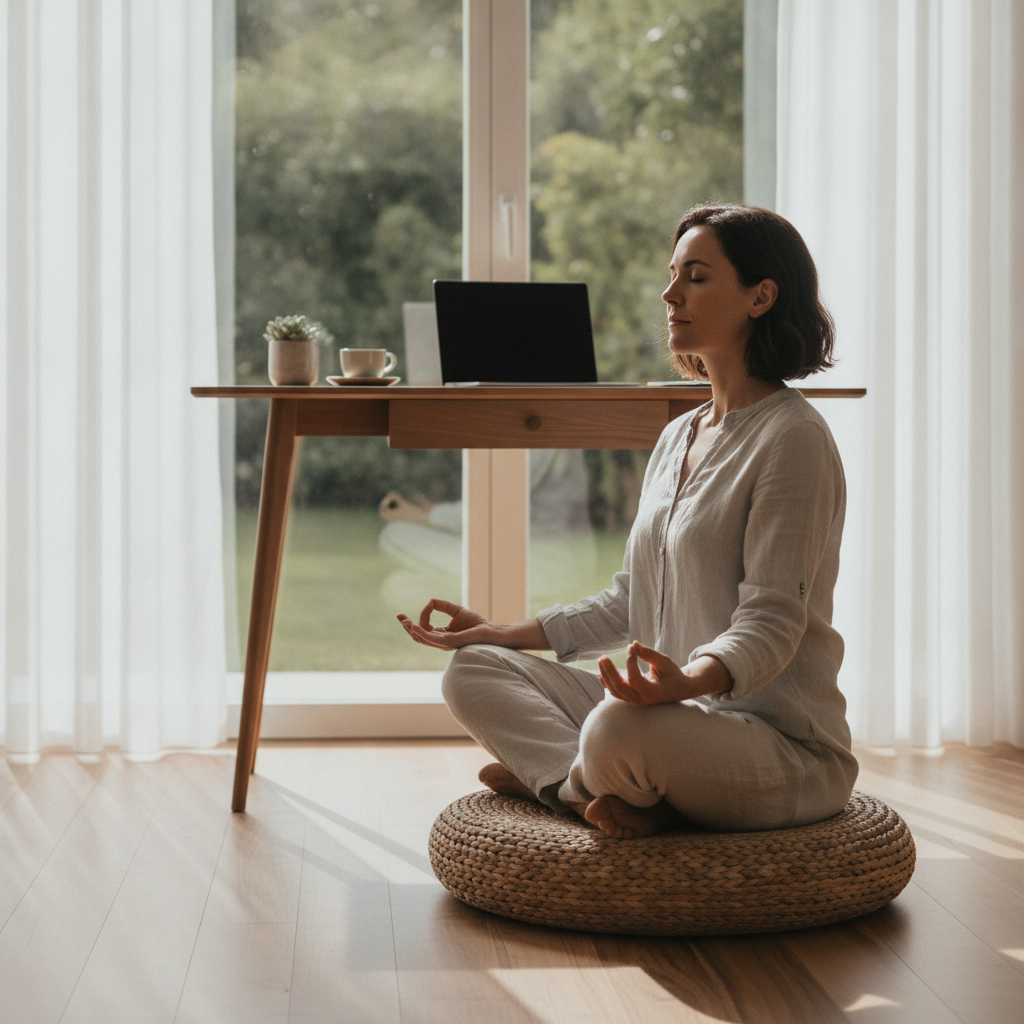
Most people return to their screens within seconds of finishing lunch, and the cost shows up an hour later as sluggish thinking, a heavy stomach, and the familiar pull toward a second coffee. The gap between finishing a meal and resuming work is small but consequential. What happens in those first ten minutes after eating has a real effect on how well your digestive system activates and how clearly your mind performs through the early afternoon.
Why the Transition Moment Matters More Than You Think
Your body shifts into a parasympathetic state — sometimes called rest-and-digest — immediately after a meal, but only if it's given the right conditions to do so. Jumping back to a screen floods your system with low-level stress signals that compete directly with that digestive process. Blood that your body is trying to redirect toward the gut gets pulled toward cognitive and visual processing instead. The result is slower digestion, more bloating, and a sharper energy drop around 2 p.m. Ten minutes is enough time to let that transition happen properly.
The Mechanics of Seated Breathing on Digestion
Slow, diaphragmatic breathing — the kind you practice sitting upright with relaxed shoulders — activates the vagus nerve, which runs directly through the digestive tract. This nerve is largely responsible for triggering peristalsis, the rhythmic muscular movement that moves food through your system. When you breathe shallowly at a desk while reading emails, vagal tone drops. When you breathe slowly and deliberately for even a few minutes, it rises. The practical result is that food moves more efficiently, gas is less likely to accumulate, and that heavy post-lunch weight tends to lift faster.
A Simple Breathing Pattern Anyone Can Use
You don't need an app or a guided session. The most effective pattern for this kind of reset is straightforward: inhale for four counts, hold briefly for two, exhale for six. The extended exhale is the key part — it's what actually activates the parasympathetic response. Apps like Insight Timer or Calm offer free timers and gentle cues if you want a light structure, but a simple phone timer set to ten minutes works just as well. Sit upright in your chair, place both feet flat on the floor, and let your belly expand on the inhale rather than your chest.
What Changes in Your Afternoon Focus
The cognitive shift from this kind of reset is noticeable within a week of making it consistent. When your digestive system is working efficiently and your nervous system isn't in a low-grade stress response, your prefrontal cortex — the part responsible for decision-making and sustained attention — becomes more accessible. The early afternoon slump doesn't disappear entirely, but it becomes significantly shallower. Tasks that usually feel friction-heavy around 1:30 p.m. tend to feel more approachable, and the mental clarity tends to hold longer before degrading.
Setting Up the Habit Without Willpower
The easiest way to make this stick is to attach it to something that already happens. Finish eating, put your plate or container aside, and treat the breathing reset as the next step in a fixed sequence rather than an optional addition. Some people find it helpful to step away from their desk entirely and sit in a different chair, or to move to a quiet corner of the office. At WeWork locations or similar co-working spaces, a soft seating area or a quiet phone booth works well. The physical cue of a different space reinforces the psychological shift.
Avoiding the Temptation to Multitask Through It
The most common way this practice falls apart is treating those ten minutes as an opportunity to do something passive — listening to a podcast, scrolling lightly, or reviewing a to-do list. All of those activities keep your nervous system in an active, alert state, which is exactly what you're trying to step away from. The reset only works when the mind is genuinely allowed to idle. If silence feels uncomfortable at first, that discomfort tends to fade after four or five days of consistency. Resist the pull to fill the gap.
How This Compares to a Post-Lunch Walk
A short walk after lunch is genuinely beneficial, but it isn't a direct substitute for a seated breathing reset. Walking raises heart rate slightly and stimulates cortisol in a way that's helpful for energy but less helpful for digestive activation. The seated breathing approach targets vagal tone specifically, which is what the gut needs in those first minutes after a meal. The two can complement each other well — a five-minute breathing reset followed by a five-minute walk covers both bases without requiring a long break from your workday.
Building It Into Different Work Schedules
If you work from home, the barrier to this practice is low. If you're in an office, it requires a small amount of social confidence to sit quietly for ten minutes rather than returning immediately to your desk. That comfort builds quickly once you notice the afternoon difference. For those with variable lunch times, keeping the reset anchored to the meal itself — rather than to a fixed clock time — makes it more adaptable. Remote workers in cities like Austin or Amsterdam who build this into a midday routine often describe it as one of the few habits that genuinely changes how they feel through the second half of a workday.
Small shifts in how you handle the transition between eating and working tend to compound quietly over time. A ten-minute seated breathing reset isn't dramatic, but it addresses two real physiological processes — digestive activation and nervous system state — that most productivity advice ignores entirely. Stick with it through the first two weeks, and the early afternoon becomes a noticeably different kind of time.