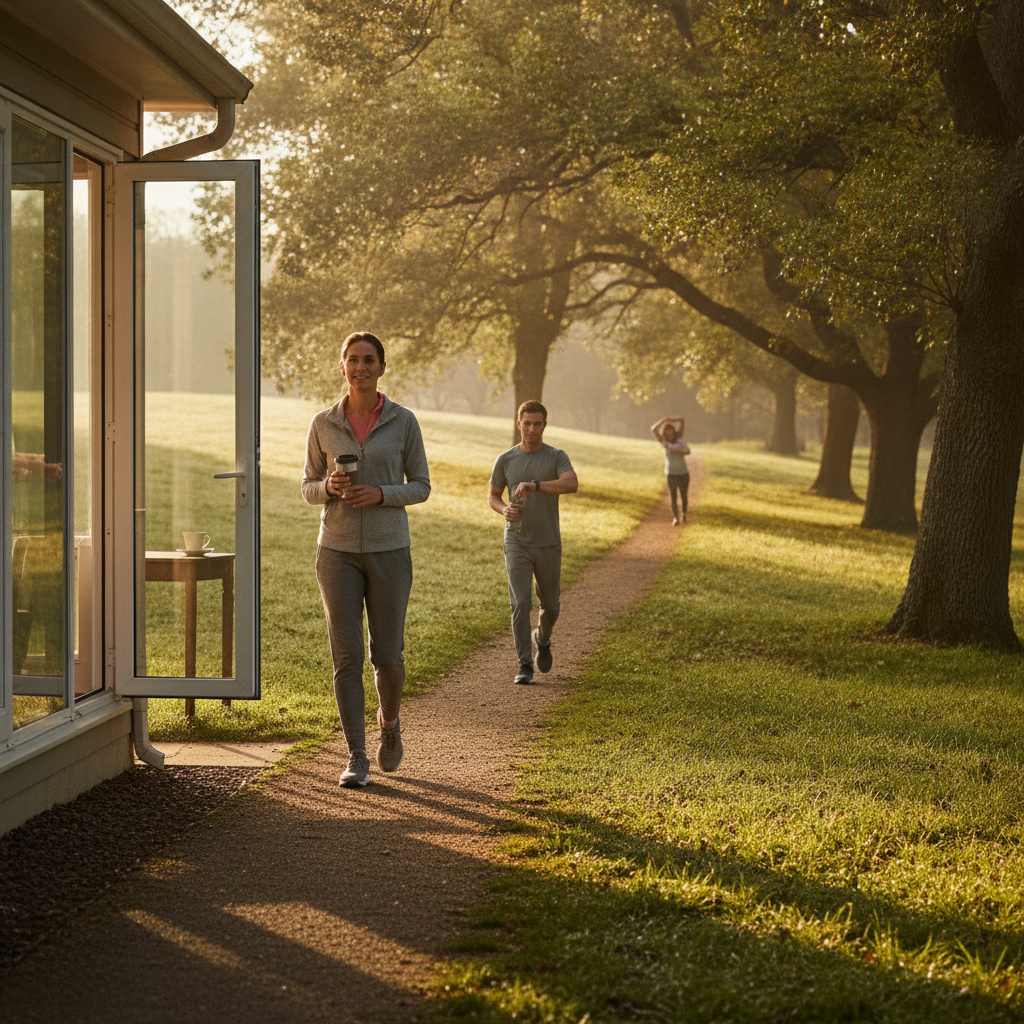
Timing is everything when it comes to caffeine, and the sequence of a morning routine shapes how quickly and smoothly that caffeine translates into usable mental clarity. Most people drink their coffee and stay seated — scrolling, reading, or easing into work — without realizing that what happens in the twenty minutes following that first cup has a measurable effect on how well the caffeine performs. Moving that ten-minute outdoor walk to immediately after the coffee, rather than before it, turns out to be one of the more practical adjustments a person can make to their morning without changing anything else.
How Does Caffeine Actually Work in the Body?
Caffeine functions primarily by blocking adenosine receptors in the brain — adenosine being the chemical that accumulates during waking hours and produces the sensation of fatigue. When caffeine occupies those receptors, the drowsiness signal is suppressed and alertness increases. The catch is that caffeine doesn't act instantly. Absorption through the gastrointestinal tract takes time, and circulating levels in the bloodstream typically peak somewhere between thirty and sixty minutes after consumption, depending on the individual's metabolism, stomach contents, and hydration status. What happens during that absorption window matters more than most people assume.
What Role Does Movement Play in Caffeine Absorption?
Physical movement accelerates blood circulation, which in turn speeds up the delivery of absorbed compounds throughout the body. A brisk ten-minute walk outdoors raises heart rate modestly, increases cardiac output, and moves blood more efficiently through the digestive system and to the brain. When this movement occurs in the window immediately after caffeine consumption, it overlaps with the absorption curve in a way that can compress the time between drinking and feeling alert. This isn't a dramatic pharmacological override — it's more of a gentle nudge to a system that's already doing its job, just doing it faster.
Why Does Outdoor Light Make This More Effective?
The outdoor component of the walk adds a layer of benefit that indoor movement doesn't fully replicate. Morning light exposure — particularly within the first hour or two after waking — triggers cortisol production through the hypothalamic-pituitary axis, which is the body's natural alertness mechanism. Cortisol and caffeine work along complementary pathways, and when both are active simultaneously, the combined effect on mental clarity is more robust than either produces alone. Fitness trackers from Garmin and apps like Rise have begun incorporating light exposure cues into their morning readiness features, reflecting how seriously this interaction is taken in applied wellness contexts.
How Does Pre-Coffee Walking Compare?
Walking before coffee follows its own logic — many people use it to shake off grogginess and prime the body before consuming caffeine. The problem with this sequence is that it separates the two alertness mechanisms rather than layering them. A walk before coffee produces a modest cortisol bump, but by the time caffeine is consumed and absorbed, that cortisol response has already begun tapering. The two peaks miss each other. Moving the walk to after the coffee keeps both curves active at the same time, so the brain receives reinforcing signals from multiple systems in a narrower window. The result, for many people, is a sharper and earlier arrival at functional focus.
What Does This Mean for Mid-Morning Productivity?
The downstream effect of this timing adjustment tends to show up most clearly in the mid-morning stretch — roughly between nine and eleven in the morning — which is when cognitive performance typically peaks for people with conventional schedules. When caffeine absorbs more efficiently and aligns with natural cortisol rhythms, that peak tends to be more pronounced and arrives earlier. People who work in environments like co-working spaces in neighborhoods like Shoreditch or Capitol Hill, where the morning pace is fast and focused work is expected from the first hour, often report that this kind of sequencing makes the early hours feel noticeably more productive without adding any extra caffeine.
How Can You Apply This to Your Morning Routine?
Implementing this shift is straightforward, and you don't need to restructure your entire morning to make it work. Drink your coffee first — sit with it if you like, but keep it brief. Within five to ten minutes of finishing the cup, head outside for a ten-minute walk at a pace that feels slightly purposeful rather than leisurely. Keep your phone in your pocket if you can. Natural light matters, so even an overcast morning outdoors beats walking on a treadmill by a window. Apps like Oura's companion platform or the Whoop app can help you track how resting heart rate and readiness scores shift over a few weeks of consistent practice. The goal isn't perfection — it's establishing a reliable morning sequence that lets caffeine do its job more effectively without requiring more of it.
As wearable technology and circadian health research continue to refine understanding of how timing affects biochemical performance, morning routine design is likely to become far more personalized. What's already clear is that the order and context of simple daily habits — a cup of coffee, a short walk, a few minutes of daylight — interact in ways that compound quietly over time. The ten-minute walk after coffee isn't a dramatic intervention; it's a small, well-placed adjustment that lets the body's natural systems work together rather than in sequence.