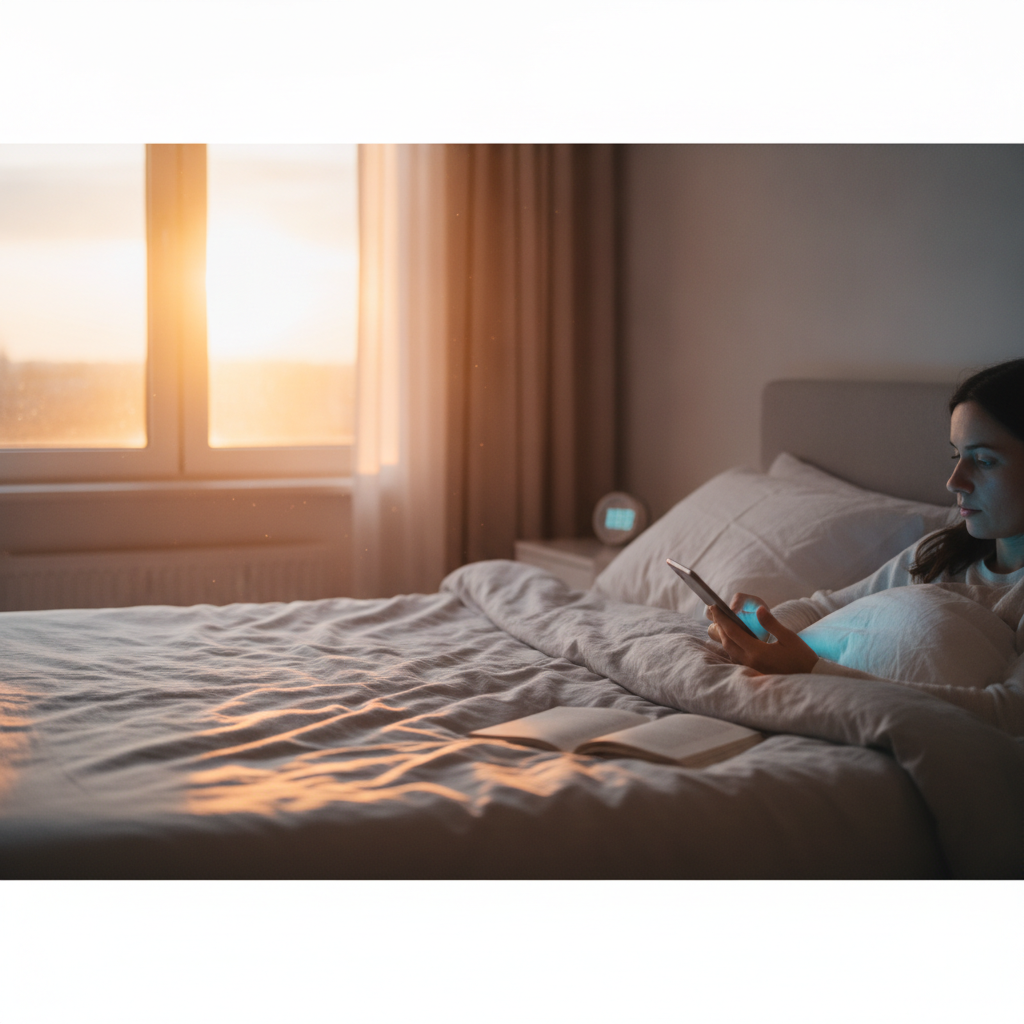
Light is one of the most powerful biological signals the human body receives, and the timing of that signal matters far more than most people realize. In the final hour before sleep, exposure to artificial light — whether from overhead fixtures, televisions, or handheld screens — can set off a cascade of neurological and hormonal changes that compromise sleep quality long before a person even closes their eyes. Understanding what happens during that window, and why it matters, begins with how the brain interprets light as a cue for wakefulness.
The Brain's Internal Timekeeping System
At the center of the body's sleep-wake regulation is the circadian rhythm, a roughly 24-hour biological clock housed in a small region of the brain called the suprachiasmatic nucleus. This internal timekeeper relies heavily on light exposure to calibrate itself — particularly the presence or absence of light in the evening hours. When the eyes detect light, especially in the blue-wavelength range, the brain interprets it as a signal that day is continuing. That interpretation triggers a suppression of melatonin, the hormone responsible for signaling the body that nighttime has arrived and sleep is appropriate.
Melatonin Suppression and Its Downstream Effects
Melatonin doesn't just make a person feel drowsy. It plays a coordinating role across multiple body systems, helping to lower core body temperature, reduce alertness, and cue the brain to begin transitioning toward deeper sleep stages. When evening light suppresses melatonin production, this entire sequence gets delayed. The body stays in a higher state of physiological arousal longer than it should. Even if a person manages to fall asleep at their usual time, the quality of what follows can be significantly diminished — particularly in the earlier, deeper stages of the sleep cycle.
What Sleep Architecture Actually Means
Sleep isn't a single, uniform state. It moves through distinct stages in repeating cycles throughout the night, including lighter non-REM stages, slow-wave deep sleep, and REM sleep — the stage most associated with memory consolidation and emotional processing. This progression is what sleep researchers refer to as sleep architecture. Each stage serves specific restorative functions, and the body's ability to cycle through them efficiently depends on entering sleep at the right point in the circadian rhythm. When melatonin is delayed by late light exposure, that architecture can shift, often reducing the proportion of slow-wave and REM sleep a person gets in the first half of the night, when those stages are most concentrated.
The Specific Role of Screen-Based Light
Not all evening light carries the same disruptive weight. The blue-wavelength light emitted by LED screens — smartphones, tablets, laptops, and most modern televisions — is particularly effective at suppressing melatonin because it closely mimics the wavelength of daylight. Apps like f.lux and Apple's Night Shift were developed specifically to reduce blue light output in the evening hours by shifting screen color toward warmer tones. Similarly, smart bulb systems from brands like Philips Hue allow users to program gradual reductions in blue light intensity as bedtime approaches. These tools don't eliminate the problem entirely, but they reduce the magnitude of the disruption when behavioral changes alone aren't practical.
Ambient Lighting and the Often-Overlooked Overhead Problem
While screens tend to receive the most attention in conversations about bedtime light exposure, the ambient lighting in living spaces contributes meaningfully to the same problem. Bright overhead lighting in kitchens and living rooms — especially cooler-toned LED bulbs — can keep melatonin suppressed even when screens are set aside. Research into light sensitivity has made clear that intensity and color temperature both matter. Warmer, dimmer light sources in the evening, such as floor lamps or table lamps set to low brightness, create an environment that's far more compatible with the body's natural wind-down process. Many sleep clinicians recommend transitioning to this kind of ambient lighting well before the last hour before bed.
Practical Changes for the Pre-Sleep Hour
For those looking to protect their sleep architecture, the pre-sleep hour is the most critical window to address. Start by switching off overhead lights and relying on warm, low-intensity lamps after 9 p.m. or roughly 90 minutes before your target bedtime. If screens are unavoidable, enable a blue-light filter through your device settings or a third-party app like f.lux, and reduce screen brightness as far as comfortable. Consider replacing your standard bedroom bulbs with options from Casper's sleep-friendly lighting line or similar products designed around lower blue-light output. Physical books, light stretching, and low-effort conversation are natural alternatives that allow the brain to begin its descent into sleep without competing light signals pulling it back toward wakefulness. Even modest changes in this final hour can produce noticeable improvements in how rested you feel the following morning.
The science of light and sleep continues to develop, with researchers increasingly focused on how chronic evening light exposure may contribute to broader health patterns beyond fatigue — including impacts on metabolic function and mood regulation over time. As awareness grows, lighting design in homes, hospitals, and even urban planning is beginning to reflect these biological realities. Smarter defaults in consumer electronics, improvements in adaptive lighting technology, and a broader cultural shift toward treating sleep as a health priority are all moving in the same direction. The last hour before bed may seem like a small window, but its effects on the body's nightly restoration process are anything but minor.