There is a particular kind of disorientation that comes from staying in a hotel district — that familiar geography of chain restaurants, luggage-wheeling strangers, and streets that feel perpetually in-between, as though the neighborhood exists only to serve people passing through it. Most travelers know this feeling without being able to name it precisely. The surroundings are clean, convenient, and almost entirely hollow, offering little of the texture that makes a city worth visiting in the first place. When accommodation is chosen from a map point rather than a lived sense of place, the city becomes a series of attractions connected by transit rather than a world with its own internal logic.
What a Residential Address Actually Gives You
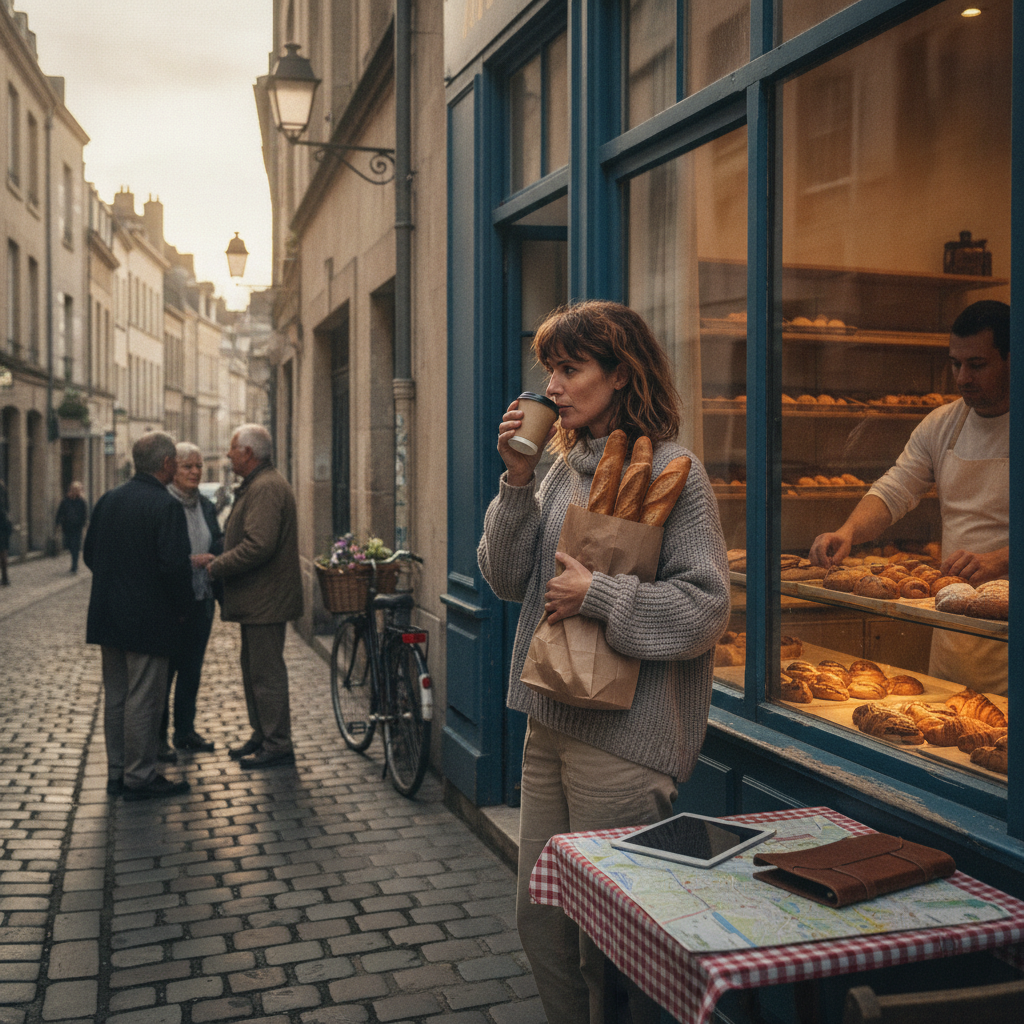
Choosing a flat or room in an area where people actually live — Pigneto in Rome, Neukölln in Berlin, Shimokitazawa in Tokyo — reorients the entire rhythm of a trip from its first morning. The nearest café is not designed for tourists; its menu may be handwritten, its hours irregular, its regulars visibly territorial about their corner tables. That small friction is, counterintuitively, the point. Encountering a neighborhood on its own terms, rather than on terms designed to smooth the tourist's path, produces a quality of attention that polished itineraries rarely achieve. The traveler begins to notice what is ordinary rather than what is remarkable, and in doing so, often finds the remarkable hidden inside the ordinary.
There is a French concept, *dépaysement* — loosely translated as the disorientation of being in a foreign place, carrying a faint but productive sense of estrangement — that residential neighborhoods generate more reliably than tourist zones. A tourist district is designed to minimize dépaysement, to make the unfamiliar feel manageable. A residential street does the opposite: it allows the city to remain itself, slightly unreadable, requiring the visitor to slow down and pay closer attention. This is not always comfortable, but it tends to be far more memorable.
The Practicalities That Shape the Experience
Booking in a residential area comes with logistical realities that differ substantially from hotel-district stays. Supermarkets, pharmacies, and local transit stops become navigational anchors rather than afterthoughts. Platforms like Airbnb, Booking.com, and Vrbo all list properties in non-tourist zones, though finding them requires filtering by neighborhood name rather than proximity to landmarks. Reading host notes carefully matters here — a host who describes their street's morning market or the best bakery two blocks over is signaling something about how they understand the local area, and that kind of knowledge tends to be reliable. The accommodation itself is often more spacious for a comparable price, particularly in European cities where central hotel rooms have become increasingly compressed.
Shopping at a local *mercado* (covered market) or corner store, cooking occasionally in a proper kitchen, using the same laundromat the neighbors use — these small domestic acts accumulate into something that feels less like a visit and more like a temporary residency. The distinction matters more than it might initially seem. A visitor observes; a temporary resident participates, even minimally. That shift in posture changes what gets noticed and what gets remembered.
Learning the Unwritten Rules of a Place
Every neighborhood has what urban sociologists call *informal norms* — the unwritten rules governing volume levels at certain hours, which side of the footpath pedestrians use, whether eye contact with strangers is customary or considered intrusive. These norms are invisible in tourist zones, which are socially flattened to accommodate people from everywhere at once. In residential areas, the norms are intact and legible, if a traveler is paying attention. Learning them, even imperfectly, produces a kind of low-level cultural fluency that no guided tour can replicate.
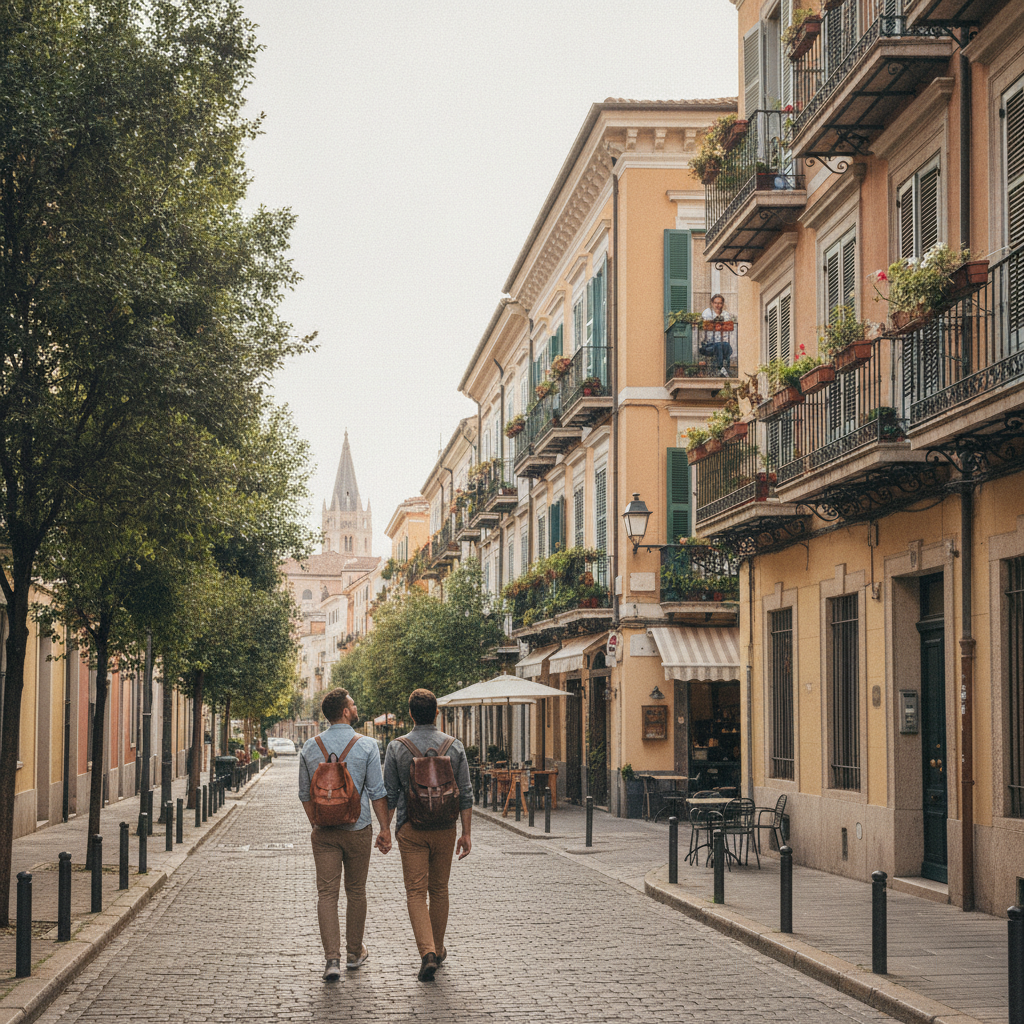
This is where residential stays begin to function as something closer to cultural education than leisure. Neighborhoods like Cihangir in Istanbul or Le Marais in Paris — both of which have retained significant local populations despite tourist interest — carry distinct social atmospheres that shift by time of day and day of week. Spending several nights in one place creates enough repetition to begin reading those shifts, to recognize the school-run hour, the Sunday quiet, the particular energy of a Friday evening. These rhythms are the city's actual personality, and they're rarely visible from a hotel window overlooking a monument.
How the Experience Stays With You
When you choose a neighborhood apartment over a central hotel, the city you carry home with you is a different city — more specific, more contradictory, less photogenic and more real. You remember the particular slant of light in a particular stairwell, the smell of a bakery you passed each morning, the sound of a language you don't speak filtering through a thin wall. These are not the memories produced by a highlight-reel itinerary. They are the memories produced by having been, however briefly, *inside* something rather than standing in front of it.
This kind of travel asks a little more — more patience, more willingness to be confused, more comfort with not knowing what the sign above the door says. But the return on that patience is a relationship with a city that survives the trip home. The disorientation of that first morning in an unfamiliar residential street, which can feel like a small inconvenience, turns out to be exactly the thing worth seeking — the same productive estrangement that makes travel worth doing in the first place.