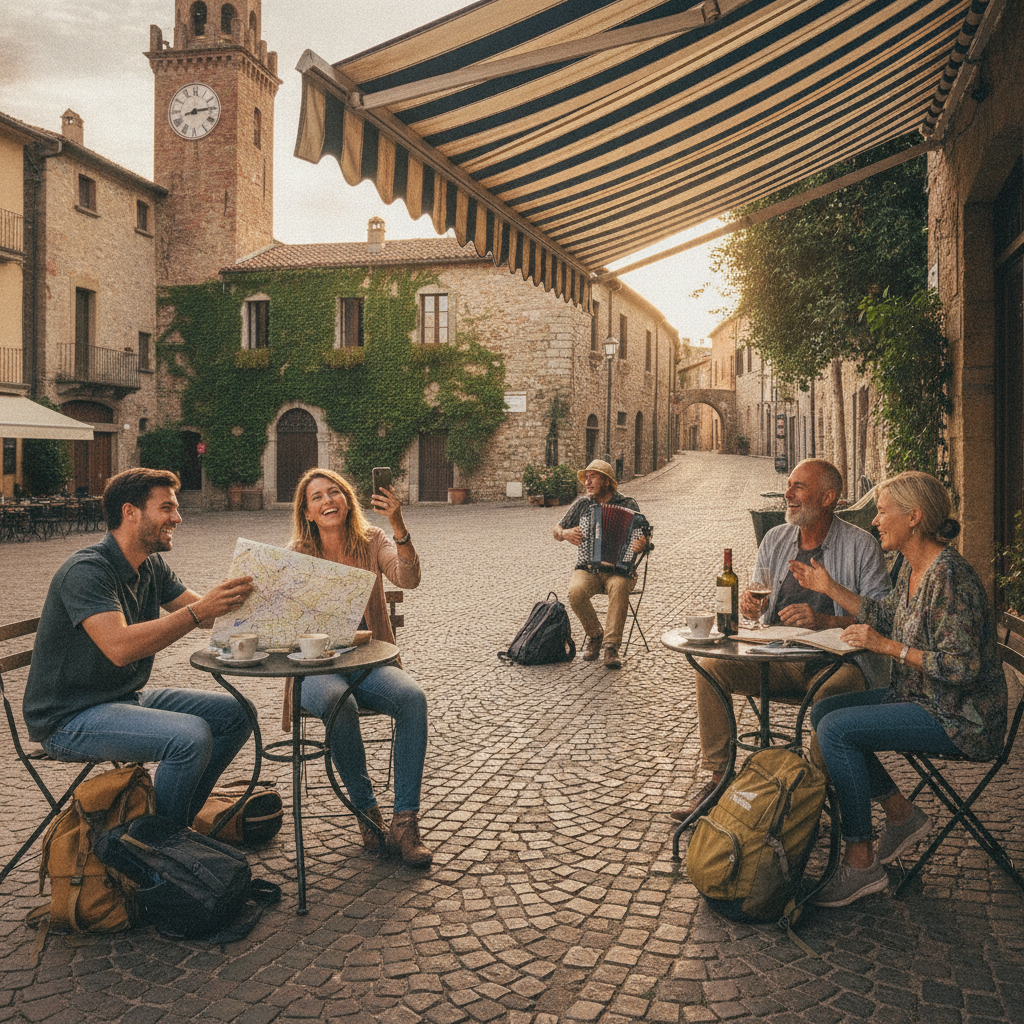
The most memorable travel moments rarely appear on any itinerary. They happen in the gap between one scheduled activity and the next — a stumbled-upon market, a conversation with a shopkeeper that leads to a hidden trail, a rainstorm that forces a two-hour wait inside a café that turns out to serve the best food in town. These moments can't be planned. But they can be protected.
The Problem With Filling Every Day
A two-week trip feels like a lot of time until the planning begins. Suddenly, every day has a purpose, every hour carries a reservation, and the itinerary starts to resemble a work schedule more than a holiday. When travelers build their plans this way, they arrive exhausted and leave feeling like they missed something — even when they technically saw everything on the list. The tightness of a fully packed itinerary doesn't just remove spontaneity; it removes the mental space needed to actually absorb what's in front of you.
Why Travelers Over-Plan in the First Place
Over-planning often comes from a reasonable place: fear of wasting time or money in an unfamiliar destination. Booking accommodation, transport, and activities in advance feels responsible, and in many cases it is. The issue arises when structure becomes a substitute for presence. Planning every hour of a two-week trip signals an underlying anxiety about the unknown — and travel, by its nature, is made up almost entirely of the unknown. The solution isn't less preparation. It's smarter allocation of the time you do plan.
What a Three-Day Overlap Actually Means
Building a three-day overlap into a fourteen-day trip doesn't mean leaving three entire days blank. It means distributing roughly three days' worth of unstructured time across the full two weeks — sometimes as a free afternoon, sometimes as a full unscheduled day, sometimes as an intentionally short travel day that doesn't require squeezing in a visit before the train departs. Think of it less as empty space and more as breathing room woven into the fabric of the trip. When time pressure eases even slightly, a different kind of travel becomes possible.
How to Build It Into the Structure
A practical approach is to treat the first and last days of the trip as genuinely low-commitment. Arrival days and departure days are often over-stuffed with ambition that evaporates the moment a delayed flight or misread transit map appears. Beyond those bookends, spacing one unplanned half-day every three or four days gives the itinerary a natural rhythm. Apps like TripIt or Google Trips can help visualize where the density is highest, making it easier to identify which days carry too much and where a deliberate gap might fit without unraveling the overall plan.
The Role of Seasonal Timing in Creating Flexibility
Travel in the spring shoulder season — late March through May across much of Europe, or September through October in places like Portugal's Alentejo region or the Greek islands — naturally supports a looser pace. Crowds are thinner, temperatures are moderate, and the pressure to see everything before the masses arrive is reduced. When conditions outside feel inviting rather than overwhelming, unstructured time becomes genuinely enjoyable rather than anxiety-inducing. Choosing a season that complements a slower pace is itself a planning decision, one that makes the three-day overlap far easier to protect.
Timing Within the Day Matters Too
Beyond the calendar, the timing of activities within each day shapes how much breathing room actually exists. Travelers who front-load mornings with visits and leave afternoons open tend to have better experiences than those who attempt the reverse. Energy is higher, crowds at major sites are often smaller in early hours, and finishing the structured part of the day by early afternoon leaves genuine time to follow whatever direction the surroundings suggest. Afternoon wandering in places like Lisbon's Mouraria neighborhood or a slow walk through a Kyoto side street rarely appears on itineraries — and almost always ends up in the trip's highlight reel.
Using Digital Tools Without Over-Structuring
There's a difference between using planning tools to support flexibility and using them to eliminate it. Apps like Notion or Wanderlog are useful for keeping track of ideas, booking confirmations, and loose intentions without converting every thought into a fixed appointment. Saving a list of restaurants, neighborhoods, or activities as possibilities rather than commitments means there's always something to do when the mood or weather shifts — but no obligation to follow through if something better presents itself. The goal is a plan that serves the traveler, not the other way around.
The Moments That Actually Last
Travelers who reflect on their best trips rarely describe the moments they planned most carefully. The planned moments are often satisfying — a boat trip along a well-known coastline, a museum that lived up to its reputation — but they tend to fade into a general impression of having been well-organized. It's the unplanned ones that lodge themselves into memory with unusual clarity: the unexpected rainstorm, the detour that revealed a whole other version of a city, the extra day that wasn't supposed to be there but ended up becoming the whole point. These experiences aren't accidents. They're the result of having left room for them.
A trip built with three days of deliberate overlap doesn't feel emptier than a fully scheduled one. It feels larger. The itinerary still exists — it just has enough give in it to accommodate reality, which rarely follows a schedule. When travelers plan with that understanding from the start, they stop trying to outrun the unexpected and start trusting that it has something to offer. That shift, more than any single destination or activity, is what tends to make a two-week trip feel like it was worth every moment of preparation.