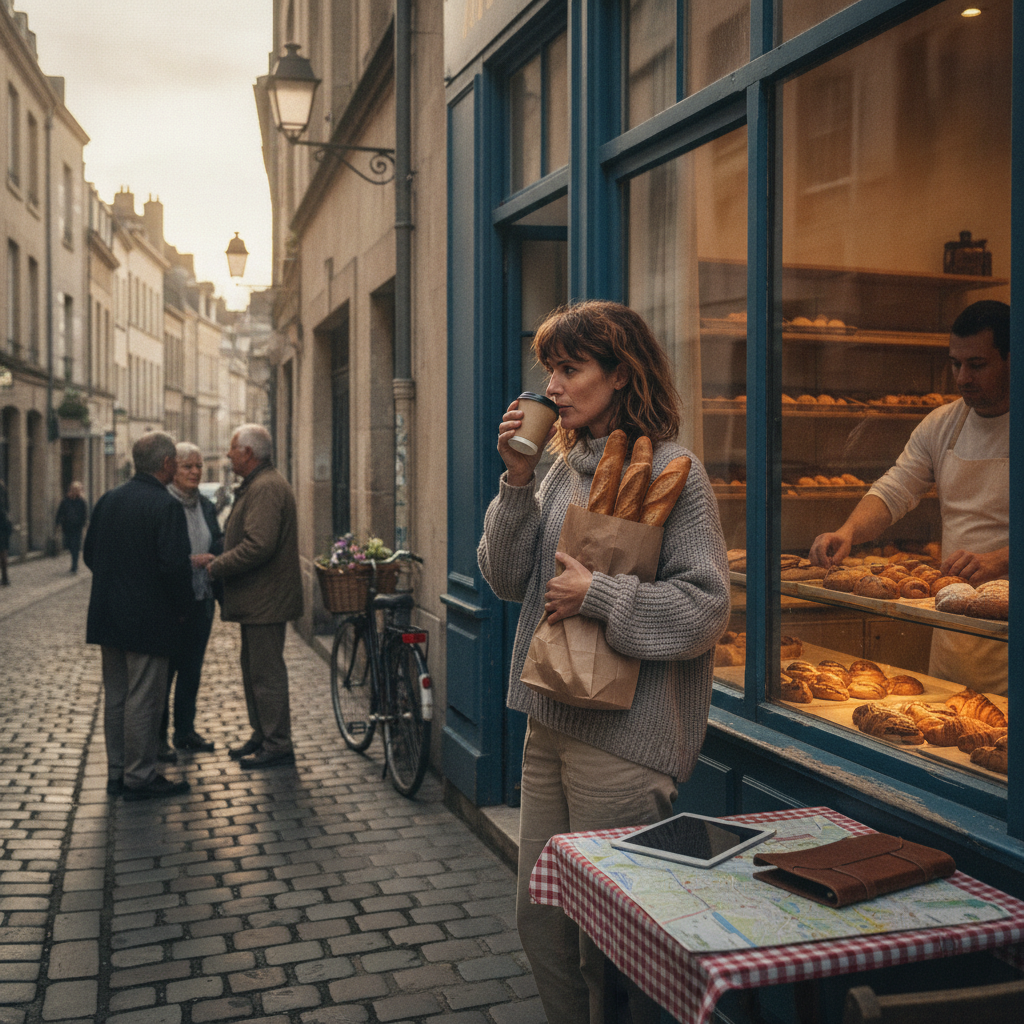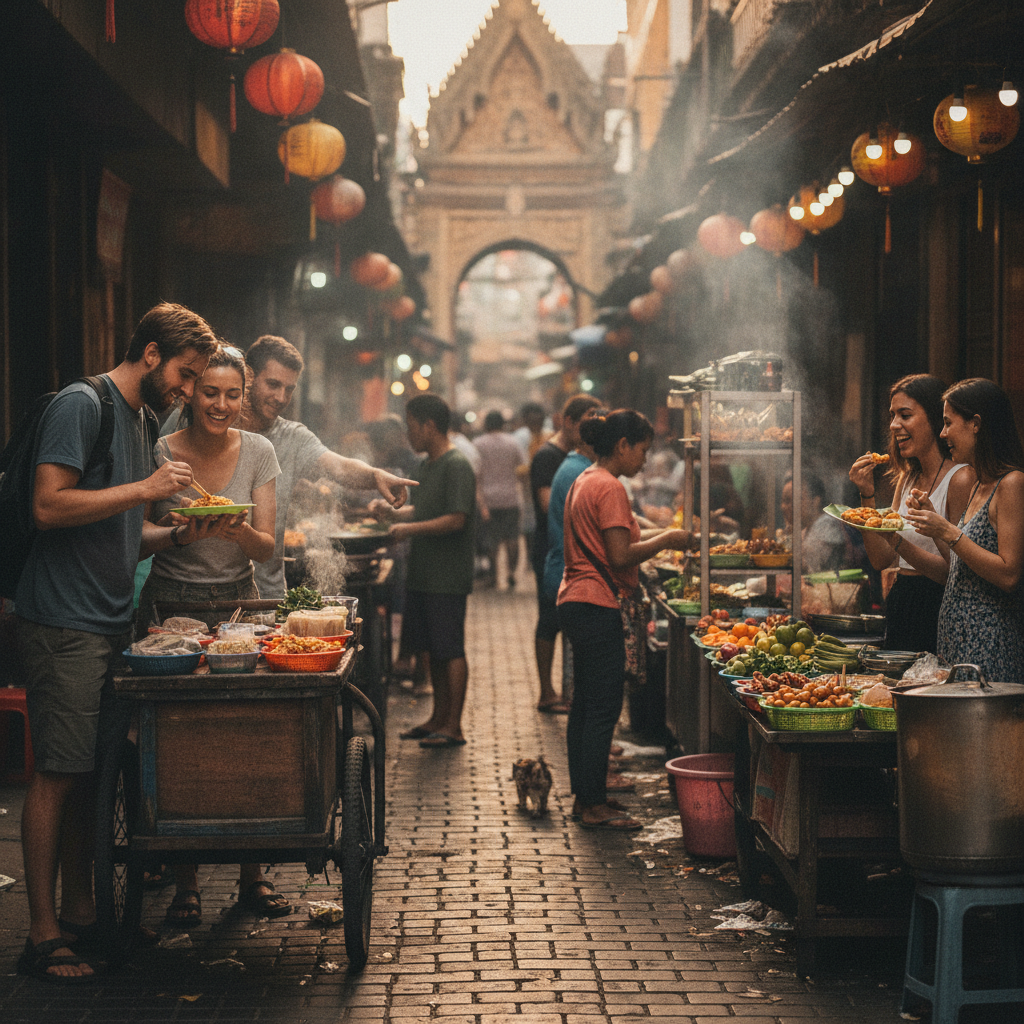
Most travel itineraries follow the same invisible script: famous cathedral, national museum, scenic viewpoint, repeat. It's a logical approach on paper, but it tends to produce a particular kind of trip — visually impressive, culturally thin, and surprisingly expensive. The restaurant bill near a major landmark can run two or three times what the same meal costs four streets away, and you spend most of your time surrounded by other tourists rather than the city itself. Routing a trip around a country's street food neighborhoods flips that equation. Your budget drops, your pace slows, and what you carry home in your memory is far more specific and real.
Research the Eating Districts Before You Book Anything
Before you look at hotels or flights, spend time learning which neighborhoods in your destination are known for their food culture. Bangkok has Yaowarat in Chinatown and the vendors clustering around Or Tor Kor Market. Mexico City has the Mercado de Medellín in Roma Norte. Istanbul's Kadıköy district on the Asian side runs thick with small grills, fish stalls, and pastry counters. These places are documented in food journalism, travel forums, and apps like Google Maps — look at the density of highly rated street stalls in a given area and let that guide where you sleep, not which landmark is closest.
Anchor Your Accommodation to the Eating Zone
Where you stay shapes everything about how a trip feels day to day. When your guesthouse or apartment is inside or adjacent to a food neighborhood, meals stop being decisions and become natural interruptions in a walking day. You stumble into the morning market on the way back from a run. You eat a late lunch from a cart at a corner you'd walked past twice already. Proximity to this kind of eating environment also tends to mean residential pricing — further from tourist infrastructure, the accommodation rates drop noticeably without any loss in comfort or safety.
Build Your Daily Route Outward From Food, Not Inward From Sights
The usual method is to pin a list of sights onto a map and then find the most efficient route between them. Try reversing that. Start each day by identifying where you want to eat — breakfast from one corner, lunch from another — and then let the walking between those points reveal what else exists. Some of the most interesting things you'll encounter on any trip aren't catalogued on any tourism website. They show up between destinations when you're already moving slowly enough to notice them. Street food neighborhoods reward slow, low-agenda walking in a way that landmark circuits simply don't.
Use Food Timing to Avoid Crowds at the Major Sites
If you do want to see the famous landmarks — and there's nothing wrong with that — use local meal times strategically. Most tourists cluster at popular sites during mid-morning and early afternoon. If you're sitting at a food market eating a proper lunch at noon, you're not standing in a queue at the same time as everyone else. Visiting landmarks in the late afternoon or just before closing, after spending the middle of the day eating and resting like locals do, means shorter queues, softer light, and a slightly more honest version of the place.
Track Spend in Cash and You'll Naturally Eat More Wisely
Street food is almost always a cash economy, and pulling out physical money for each transaction gives you a running sense of what things actually cost. A full meal of grilled meats, rice, and a cold drink at a street stall in Penang or Oaxaca often costs less than a single item from a tourist-facing café one neighborhood over. When you're paying cash, the gap between those two experiences becomes impossible to ignore. Setting a daily cash food budget — loose, not punishing — tends to keep you eating from the right places and away from the restaurants that exist purely to intercept people who aren't paying attention.
Let Repeat Visits Build Something You Can't Plan
Going back to the same vendor on day three that you visited on day one produces something no guidebook can manufacture. The person behind the cart recognizes you, maybe adjusts what they put in front of you, maybe just nods. That small exchange is the entire point of this kind of travel — not the Instagram photo of a landmark, but the accumulated texture of a few days spent in one place repeatedly. Street food stalls reward return visitors in a way that tourist restaurants rarely do, because the relationships there are real and the clientele is mostly local.
Compare Neighborhood Character Before You Commit to One Area
Not all food neighborhoods have the same personality, and it's worth spending your first day doing a loose survey before deciding where to focus. Some markets are primarily morning operations — done by ten, quiet by noon. Others come alive at dusk and run until midnight. Some are compact and walkable; others are sprawling and better navigated by tuk-tuk or metro stop. Apps like Yelp and Google Maps give you a rough sense of operating hours and concentration, but walking through two or three options on arrival and letting your instincts guide the final pick will serve you better than any pre-trip ranking.
Document What You Eat, Not Just What You See
The photographs most people take on a trip are of architecture, skylines, and famous views. Those images blur together after a few months. The ones that stay specific and retrievable are the ones of a bowl of soup you ate standing at a folding table, or the hand-wrapped package from a vendor whose name you never caught. Taking a photo of food and jotting a quick note about where you were and what time of day it was creates a more vivid record of the trip than any monument photo. It's also a practical reference — something to return to if you ever make it back.
The way people plan food-centered trips is getting more sophisticated. Apps are improving at surfacing hyper-local eating spots rather than just the most-reviewed tourist restaurants, and travel communities built around street food culture — on Reddit, in food-focused newsletters, across platforms like TikTok — are producing genuinely useful ground-level information faster than traditional guidebooks ever could. As that information becomes easier to access, routing a trip around street food neighborhoods will feel less like an unconventional choice and more like the obvious one. The budget and the memories both tend to confirm it.