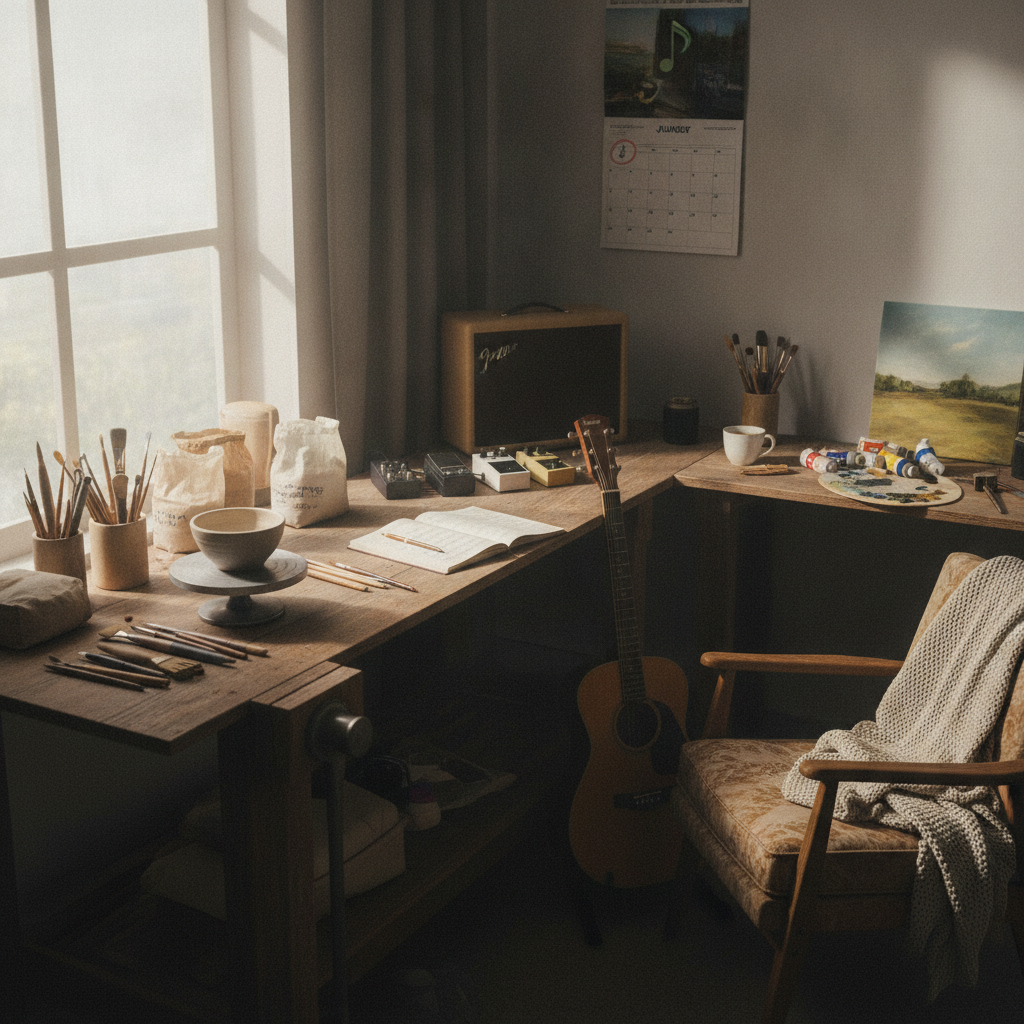
Creative restlessness is one of the quieter threats to a fulfilling personal life — not loud enough to demand attention, but persistent enough to erode the habits that matter most over time. Most people abandon hobbies not because they lose interest permanently, but because they exhaust a particular phase of engagement without realizing that the interest itself is still alive beneath the surface. The solution isn't to accumulate more hobbies or to force disciplined loyalty to a single one, but to rotate thoughtfully among a small, intentional collection — letting each breathe, rest, and renew before returning to it.
The Nature of Creative Burnout in Personal Hobbies
Burnout doesn't only happen at work. It arrives in studios, gardens, and sketchbooks too — usually disguised as boredom or diminishing enthusiasm. When someone paints every day for three weeks straight, the initial excitement gives way to a subtler fatigue, a sense that the well has temporarily run dry. This isn't failure or lack of passion; it's a natural cognitive and emotional cycle. The brain habituates to repeated stimulation, and what once felt rich and absorbing begins to register as routine. Understanding this cycle is the first step toward building a more sustainable relationship with creative pursuits.
Why a Small Rotation Outperforms a Large Collection
The instinct when restlessness strikes is often to add something new — a different craft, a fresh instrument, another genre of reading. But expanding the collection too broadly creates its own problem: shallow engagement across too many activities, none of which develop deeply enough to become genuinely satisfying. A rotation of three to five hobbies, by contrast, keeps the portfolio intimate and manageable. Each activity gets enough recurring attention to grow, while the spacing between sessions preserves the anticipation that makes returning to something feel like a pleasure rather than an obligation. Depth and variety coexist when the collection stays deliberately small.
The Japanese Concept of Ma and the Value of Creative Gaps
In Japanese aesthetics, the concept of *ma* (間) refers to negative space — the pause, the interval, the meaningful emptiness between things. Architects and musicians invoke it constantly, but the idea translates naturally into personal creative life. When a hobby sits untouched for three weeks while another takes its place, that gap isn't wasted time; it's a form of *ma* that allows the unconscious mind to process, integrate, and quietly recharge. Many people report that returning to a paused project — a half-finished watercolor, a chapter of a novel left open on the desk — feels fresher and more inspired than if they'd pushed through during the flat period. The interval does real work.
How Monthly Rotation Builds Anticipation and Momentum
A monthly rhythm strikes a practical balance between continuity and variety. Four weeks is long enough to make genuine progress in a hobby — to finish a knitting project, complete a short photography series, or work through a section of a language-learning app like Duolingo — without overstaying the window of peak engagement. When the month turns, the shift to a different activity carries natural energy; there's a fresh start feeling that mirrors the appeal of a new season. Over time, this rhythm trains a person to trust their own cycles rather than fight them, transforming what used to feel like restlessness into a structured and even pleasurable form of variety.
Designing a Rotation That Suits Different Energy Levels
Not all hobbies demand the same cognitive or physical investment, and a well-designed rotation accounts for that range. Pairing a high-concentration activity like writing or learning a musical instrument with something more meditative — tending plants, hand-lettering, walking a familiar neighborhood like Brooklyn's Carroll Gardens with a deliberate eye — creates balance across the monthly cycle. During demanding periods at work or in personal life, the lower-intensity hobby carries more weight; during quieter stretches, the more challenging one gets the fuller attention it deserves. The rotation, in this sense, mirrors and supports the natural fluctuation of a person's capacity rather than demanding a fixed output regardless of circumstances.
Keeping the Collection Anchored to Genuine Interest
A rotation only sustains itself if the hobbies in it are genuinely compelling to the person practicing them, not aspirational identities adopted from external sources. There's a meaningful difference between someone who genuinely enjoys the tactile process of bookbinding and someone who thinks they *should* enjoy it because it looks satisfying on a platform like Pinterest. The former will return to the activity with real pleasure after a month away; the latter will feel vague dread. Auditing the rotation honestly every few months — asking whether each activity still holds real appeal or has simply become inertia — keeps the collection alive and prevents the whole system from quietly calcifying into obligation.
Building Your Own Rotation with Intention
If you're assembling a rotation for the first time, start by identifying three activities that genuinely engage you at different levels of intensity and with different materials or modes. Write them down, assign each a rough monthly window, and give yourself explicit permission to set each one aside when the window closes — even mid-project. Apps like Notion or a simple paper calendar work equally well for tracking the rhythm. The goal isn't rigid scheduling but a loose structure that gives your curiosity somewhere to land each month. Over time, the rotation becomes less a system you maintain and more a natural pattern you inhabit.
Creative restlessness, it turns out, doesn't signal a character flaw or a wandering attention span — it signals a need for rhythm. The person who rotates thoughtfully among a small set of meaningful hobbies isn't scattered; they're working with the grain of how sustained engagement actually functions. The wellspring doesn't run dry when it's allowed to refill.