There is a particular kind of travel disappointment that arrives not with drama but with a quiet, deflating recognition — the realization, standing in a shuttered square on a Tuesday afternoon, that the sprawling weekly market you had pictured was held on Saturday, four days ago, and won't return until after your flight home. It's a small thing in the broad scheme of a trip, but it signals something larger: that the itinerary was built around images and assumptions rather than the actual rhythm of the place.
The Logic of Market Days in Local Culture
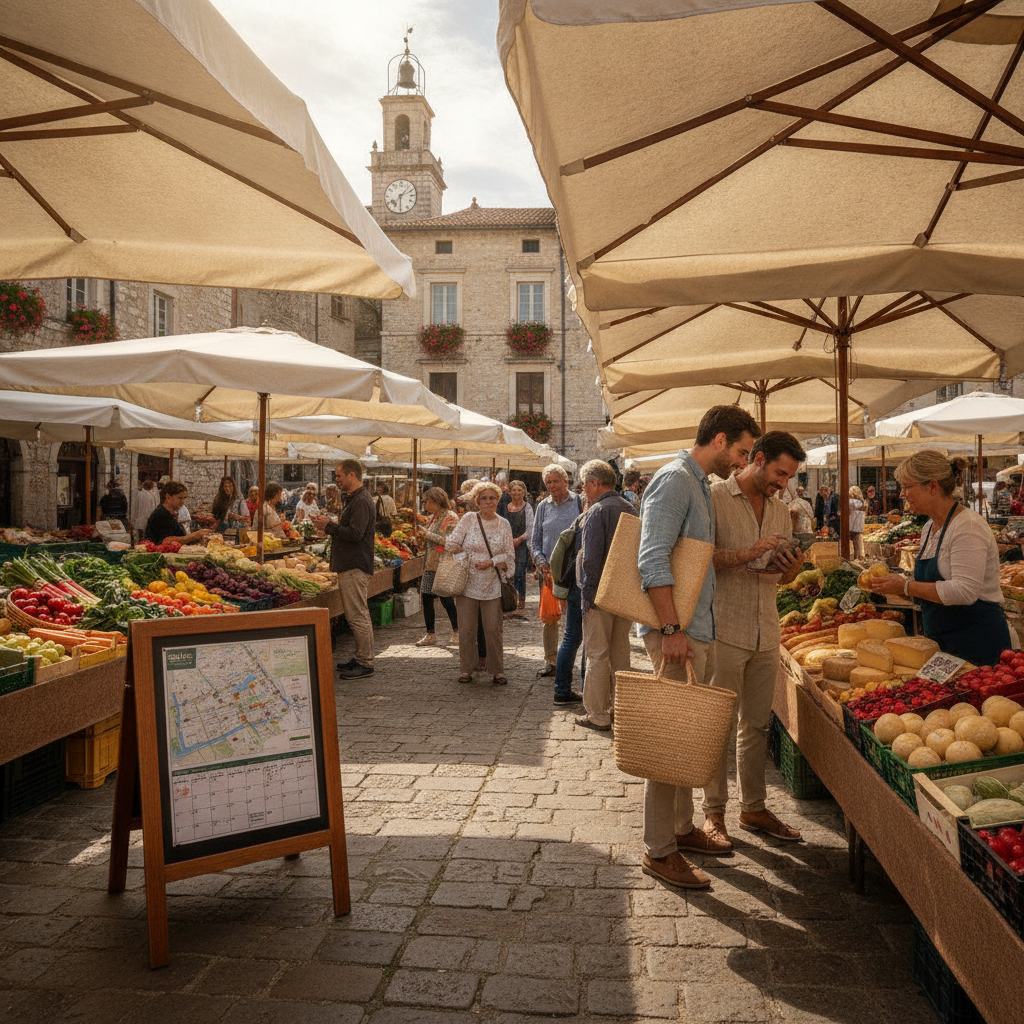
In much of Europe, Latin America, and Southeast Asia, the public market is not simply a place to buy things. It functions as a social institution, a weekly gathering point where the texture of daily life becomes briefly visible to anyone willing to show up. The French call the weekly outdoor gathering a *marché forain* — a traveling market that rotates through different towns on a fixed schedule, bringing the same vendors to a different square each day of the week. In Oaxaca, Mexico, the *tianguis* system — pre-Hispanic in origin — still operates across rotating village markets, with each community hosting its market on a specific day that locals have observed for generations. Understanding this calendar before booking means understanding that the market isn't a static attraction. It's a living event with its own logic, timing, and social weight.
Researching which day a town or neighborhood holds its main market changes not just what a traveler does, but when they arrive, how long they stay, and which surrounding towns become worth visiting in combination. A traveler heading to the Dordogne region of southwestern France, for instance, who knows that Sarlat-la-Canéda holds its most expansive market on Saturday mornings, will structure the entire first half of that week around arriving in time rather than departing the night before. The market becomes an anchor, and the itinerary builds outward from it with a coherence that no highlight reel of top-ten sights can replicate.
What Markets Reveal That Attractions Cannot
Markets operate in a register that most curated travel experiences don't reach. They are functional spaces — vendors are there to sell, locals are there to shop — and the traveler who arrives is, for once, not the intended audience. That shift in dynamic is quietly revelatory. In a well-designed museum or a popular viewpoint, everything has been arranged for the visitor's experience. At a Wednesday morning produce market in a mid-sized Umbrian hill town, the experience belongs entirely to the people who live there. A traveler present in that space becomes a witness rather than a consumer, which produces a different and more durable kind of memory.
The sensory specificity of market visits also anchors a trip in ways that are difficult to replicate through any other experience. The particular smell of a spice vendor's stall in Marrakech's Mellah neighborhood, the sound of a fishmonger calling prices in a covered market in Lisbon's Mercado da Ribeira, the visual density of stacked textiles at a highland market in Chichicastenango, Guatemala — these details embed themselves into the traveler's memory of a place far more deeply than a photograph of a famous façade. They are also, crucially, unrepeatable: that particular market, on that particular morning, with those particular vendors, exists only once.
Building the Itinerary Around Market Days
The practical implications of market research are more concrete than they might initially appear. Most towns in market-driven travel regions — Provence, the Yucatán, the hill country of Tuscany, the highlands of Peru — operate within a weekly market circuit, where neighboring villages each hold their market on a different day of the week. A traveler who maps this circuit before booking can often visit three or four distinct markets during a single week's stay simply by positioning themselves in a central town and planning day trips around the calendar rather than around proximity alone.
This approach also has financial benefits worth considering. Markets are typically the most cost-effective places to buy local food, handmade goods, and regional specialties. A traveler who arrives on market day in a Provençal village like L'Isle-sur-la-Sorgue — which holds one of the most celebrated Sunday antique and produce markets in the south of France — will find both better prices and a wider selection than any shop on any other day of the week. Planning around that single fixed event often eliminates the need to visit multiple boutiques or specialty stores, which tend to charge considerably more for a more curated, less authentic version of the same goods.
Practical Research Before You Book
Finding accurate market calendars requires a small investment of research time, but the sources are generally reliable once located. Municipal tourism websites for specific towns — not regional tourism boards, which tend toward generality — often publish weekly market schedules with seasonal notes about when certain vendors appear or when the market expands. Local Facebook groups and community forums in the destination's language frequently contain more current and granular information than any English-language travel guide. For markets in Italy, Spain, and France, apps like *Markten* or regional market directories maintained by local agricultural cooperatives provide searchable calendars by town and day.
For destinations further afield — markets in rural Morocco, highland Guatemala, or eastern Indonesia — travel forums on platforms like TripAdvisor's destination-specific boards or Reddit's travel communities often contain firsthand accounts with specific day-of-week confirmations that no official source will reliably provide. Cross-referencing two or three sources before treating a market day as fixed is a reasonable precaution, particularly in regions where schedules shift seasonally or around public holidays. This small act of verification, done before booking rather than after arriving, is what separates an itinerary built on genuine local rhythm from one built on optimistic assumption.
There is something quietly satisfying about standing in a market square at eight in the morning, watching vendors arrange their stalls, knowing that you are there because you did the work to be there — not by accident, not by luck, but because you understood the calendar and built your plans around it. That sense of alignment, between the traveler's presence and the actual pulse of a place, is exactly what the best trips are made of. It begins not at the airport, not at the hotel, but at the moment someone opens a town's municipal website and looks up which day the market runs.