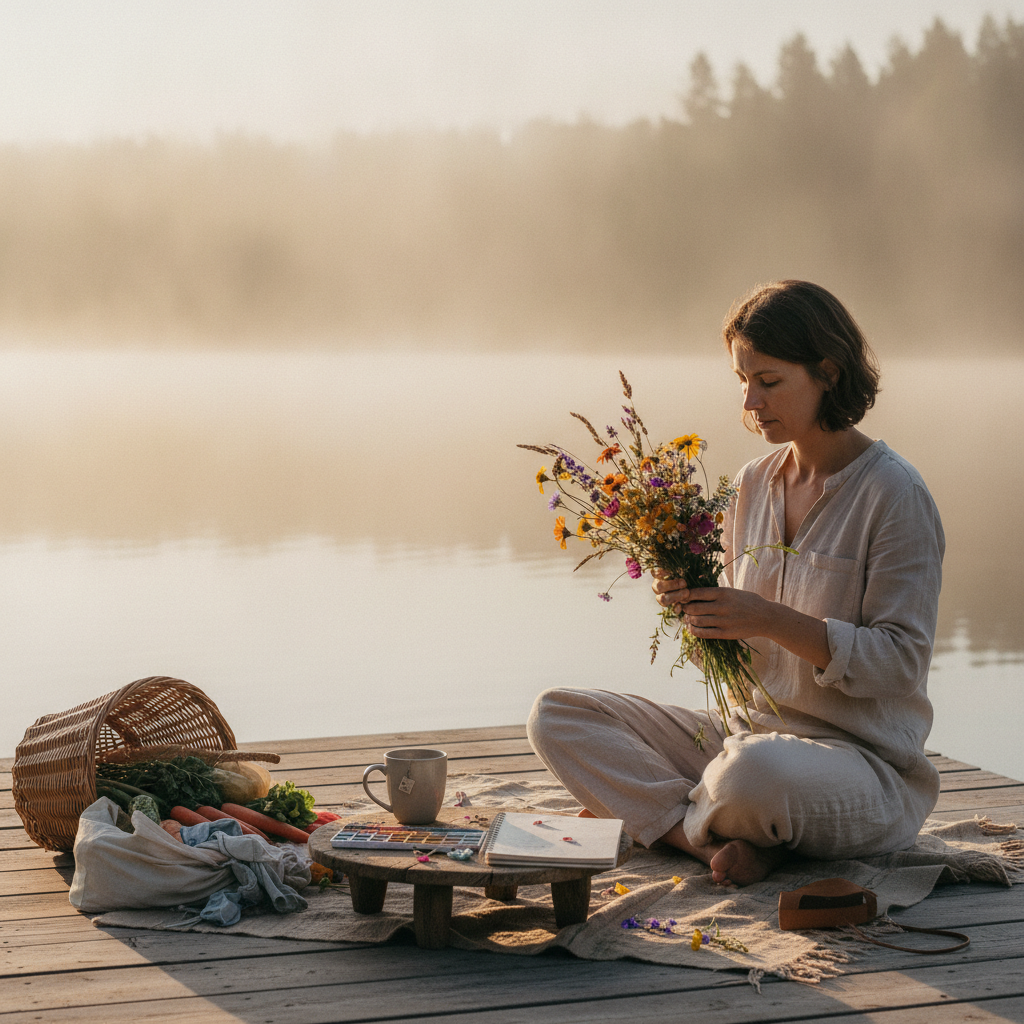
Modern life has quietly redefined the weekend as a second workweek with a different dress code. The hours between Saturday morning and Sunday afternoon have become a staging ground for errands, admin, and the relentless catching-up that five weekday evenings couldn't accommodate. Somewhere inside this arrangement, a particular quality of rest — unhurried, purposeless in the best possible sense — has been displaced so gradually that most people don't notice it's missing until they accidentally stumble back into it.
What Efficiency Culture Actually Does to Free Time
The logic of productivity doesn't stay in the office. Once a person has spent enough years optimizing their workday — batching tasks, minimizing friction, measuring output — the same mental architecture begins colonizing leisure. Weekend mornings become pipelines: dry cleaning, grocery runs, pharmacy, the hardware store. Each task is small and reasonable. Together, they consume the entire window that might have held something else entirely. The Japanese concept of *ma* — the meaningful pause between events, the space that gives a moment its texture — is exactly what errand-stacking eliminates, often without anyone consciously choosing to let it go.
Why Purposeless Activity Is Not Wasted Time
There's a durable cultural suspicion of activities that produce nothing tangible. Sitting with a pot of loose-leaf tea and watching rain move across a window, spending ninety minutes drawing badly in a sketchbook, or walking through a neighborhood like Copenhagen's Nørrebro without a destination — these feel, by the standards of efficiency culture, indulgent. But the brain requires a certain quality of low-demand engagement to perform what researchers loosely call restorative processing: the quiet consolidation of experience, emotion, and attention that only happens when output pressure is removed. An errand list, even a short one, never fully removes that pressure.
How Slow Activities Differ From Passive Rest
Collapsing onto a sofa and scrolling through content is rest in form but not always in function. The nervous system remains mildly stimulated, the attention is occupied by an endless stream of novel inputs, and the sense of agency — the feeling that one is choosing what to do with one's own time — is largely absent. A slow activity chosen entirely for its own sake operates differently. It might be baking bread in a quiet kitchen, practicing a few chords on a guitar, or arranging pressed botanicals into a frame. The key quality is volition without performance: doing something because it holds personal meaning, not because it produces a shareable result or ticks a box.
What the Body Recognizes That the Mind Ignores
The body often registers the loss of genuine leisure before the conscious mind does. The low-grade fatigue that accumulates through a relentlessly task-oriented weekend tends to present as mild irritability by Sunday evening, a faint reluctance to face Monday, and a creeping sense that rest never quite happened even when sleep was adequate. The Danish concept of *hygge* — a word frequently translated as coziness but more accurately describing a quality of warm, unhurried presence in the moment — captures something physiologically real. When the body is allowed to exist in an environment of low demand and self-chosen occupation, stress hormones settle, and the weekend actually begins to feel like one.
How One Morning Changes the Architecture of the Whole Weekend
Replacing a single errand-filled Saturday morning with one slow, chosen activity doesn't mean the errands disappear. It means they get redistributed — folded into a weekday evening, handled more efficiently in a single consolidated trip, or occasionally left undone without consequence. What changes structurally is the presence of at least one morning each week that belongs to no agenda. That morning functions as an anchor. It gives the weekend a different center of gravity, one organized around what a person actually wants rather than what the week left unfinished. Over time, this shift tends to change how people value and protect their own time in ways that extend well beyond Saturday.
Which Activities Tend to Work Best for This Purpose
The most effective slow activities share a few common qualities: they engage the hands or body in some way, they unfold at their own pace rather than a fixed schedule, and they require enough attention to crowd out rumination without demanding performance. Cooking an elaborate recipe from a cookbook like Ottolenghi's *Simple*, tending a small balcony garden, drawing from observation, or reading a long-form essay in a physical publication rather than on a screen — all of these tend to produce the particular quality of absorbed calm that distinguishes genuine rest from mere inactivity. The specific activity matters far less than the absence of any external metric for success.
How to Protect the Slow Morning Once You've Reclaimed It
The hardest part isn't choosing the activity — it's defending the time against the gravitational pull of the errand list and the ambient guilt that says an unproductive morning is a wasted one. A few practical moves help. Treating the slow morning as a fixed commitment rather than something taken from leftover time changes its status in the mental calendar. Doing the activity somewhere with low visual access to household tasks — a corner of a room, a café in a neighborhood like Fitzroy in Melbourne, a park bench — removes the triggers that convert leisure into guilt. And starting small, with just one morning a month before building toward one per week, makes the shift sustainable rather than aspirational.
The weekend morning spent entirely on someone else's agenda — or on the accumulated demands of a week that never fully ended — is not rest, even when it masquerades as responsible adult life. What slow, purposeless activity restores is not simply relaxation but a sense of authorship: the quiet conviction that one's own time belongs, at least sometimes, to no outcome at all. That quality of ownership, once recognized, is surprisingly difficult to give back to the errand list.