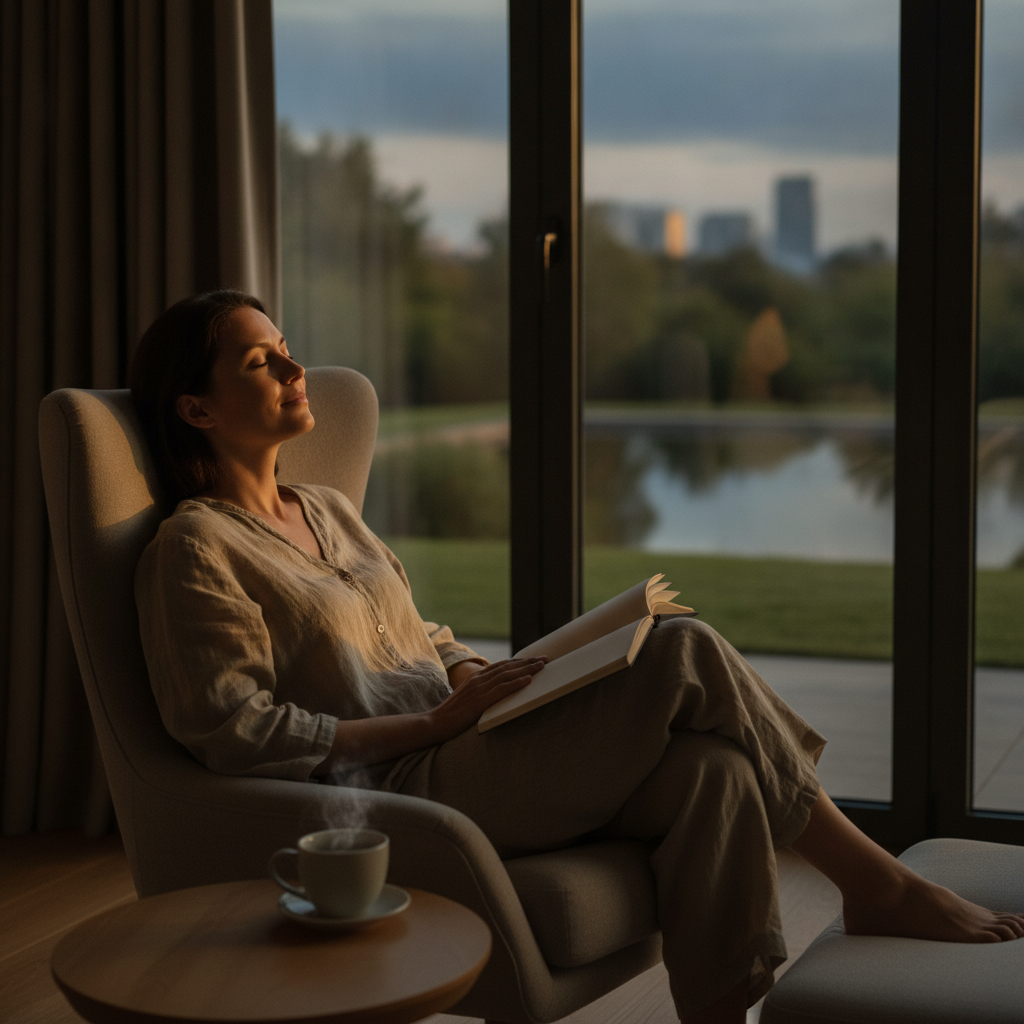
Modern living has become so thoroughly saturated with sound that most people no longer register how much auditory input they absorb from the moment they wake until the moment they sleep. Televisions run in empty rooms, playlists loop through smart speakers, and notification chimes punctuate every hour. Against this backdrop, the idea of deliberately choosing silence — not as a absence of entertainment, but as an active condition — represents a meaningful shift in how a person relates to their own nervous system. Research into stress physiology increasingly points to chronic low-level noise as a factor that keeps the body in a mild but persistent state of alertness, and quieting that input, consistently and intentionally, appears to recalibrate more than mood alone.
The Nervous System's Relationship With Constant Sound
The human auditory system was not designed for the density of sound that characterizes contemporary environments. Even sounds considered harmless — a television murmuring in the background, a fan running, a city street filtering through a window — require the brain to perform continuous low-grade processing. This processing carries a physiological cost. The autonomic nervous system, which governs the stress response, remains partially activated when the auditory environment signals unpredictability or stimulation. Over time, this sustained activation raises what might be called the body's baseline — the resting level of tension that a person carries through their day without ever identifying it as stress.
What Intentional Silence Actually Means in Practice
Intentional silence differs meaningfully from simply turning off a podcast and staring at the ceiling. It involves creating conditions where auditory input is minimized and where the absence of sound is treated as the chosen state rather than a gap between other activities. This might look like sitting in a quietly lit room without a phone, reading without background music, or taking a slow walk through a low-traffic neighborhood — places like residential streets in Portland's Sellwood district or quieter corners of Edinburgh's New Town, where ambient city noise softens considerably. The defining quality is that silence is the intention, not the accident.
The Cumulative Effect Over Several Weeks
A single evening of quiet produces noticeable but temporary relief. The more consequential shift happens when silence becomes a consistent practice across three to six weeks. The nervous system, which adapts to its habitual environment, begins recalibrating its baseline activation level when it receives a reliable signal each evening that the day's demands have genuinely ended. Cortisol levels — the primary stress hormone — follow a natural rhythm that is supposed to decline steeply in the evening hours, but chronic noise exposure can blunt that decline. Regular periods of intentional silence appear to restore the sharpness of that drop, making the body's transition into rest more efficient and complete.
How Sleep Architecture and Morning Mood Connect Back
The downstream benefits of this practice extend well beyond the hour itself. When the nervous system genuinely deactivates in the evening rather than idling at a heightened level, sleep architecture improves in ways that matter practically. Slow-wave sleep — the restorative phase responsible for cellular repair and memory consolidation — becomes more accessible when cortisol has declined properly before bed. People who establish consistent evening silence often report waking with less of the low-grade dread or heaviness that can characterize mornings after restless nights. Apps like Calm or Insight Timer can support the transition into silence, though the silence itself, not any audio content within them, is what creates the physiological shift.
Why the Evening Hour Is Particularly Significant
Timing matters considerably in this practice. The hour before sleep represents a critical window in which the body's stress chemistry either winds down or remains artificially elevated. Ambient noise during this period — even at comfortable volumes — competes with the parasympathetic nervous system's effort to shift the body toward recovery. Evening silence works with the body's natural chronobiology rather than against it, aligning the external environment with internal processes that are already inclining toward rest. This is distinct from midday silence, which has its own value but lacks the same leverage over the overnight recovery cycle that determines how resilient a person feels the following day.
Building the Practice Without Forcing It
Starting this habit doesn't require dramatic restructuring of an evening routine. You can begin by identifying one hour — ideally the same hour each night — and simply not turning on any audio device during that window. If complete silence feels uncomfortable at first, which it often does for people accustomed to constant sound, that discomfort itself is informative rather than problematic; it reflects how habituated the nervous system has become to external input. Gradually, the body adjusts. You might read, do gentle stretching, prepare tomorrow's essentials, or simply sit. The content of the hour matters less than the auditory condition you maintain throughout it. Journaling tools like the Day One app can be useful companions during this time, offering a quiet, reflective anchor without introducing sound.
The observation that modern life is loud is almost too familiar to feel urgent — and yet that familiarity is precisely the problem. When noise becomes the water people swim in without noticing, silence stops feeling like a choice and starts feeling like a void. What the practice of intentional evening quiet gradually reveals is that the nervous system has preferences, and that meeting them consistently produces changes not just in how evenings feel, but in how the whole texture of daily stress is experienced. The baseline, it turns out, is more malleable than most people assume — and it responds, steadily, to the conditions it's given.