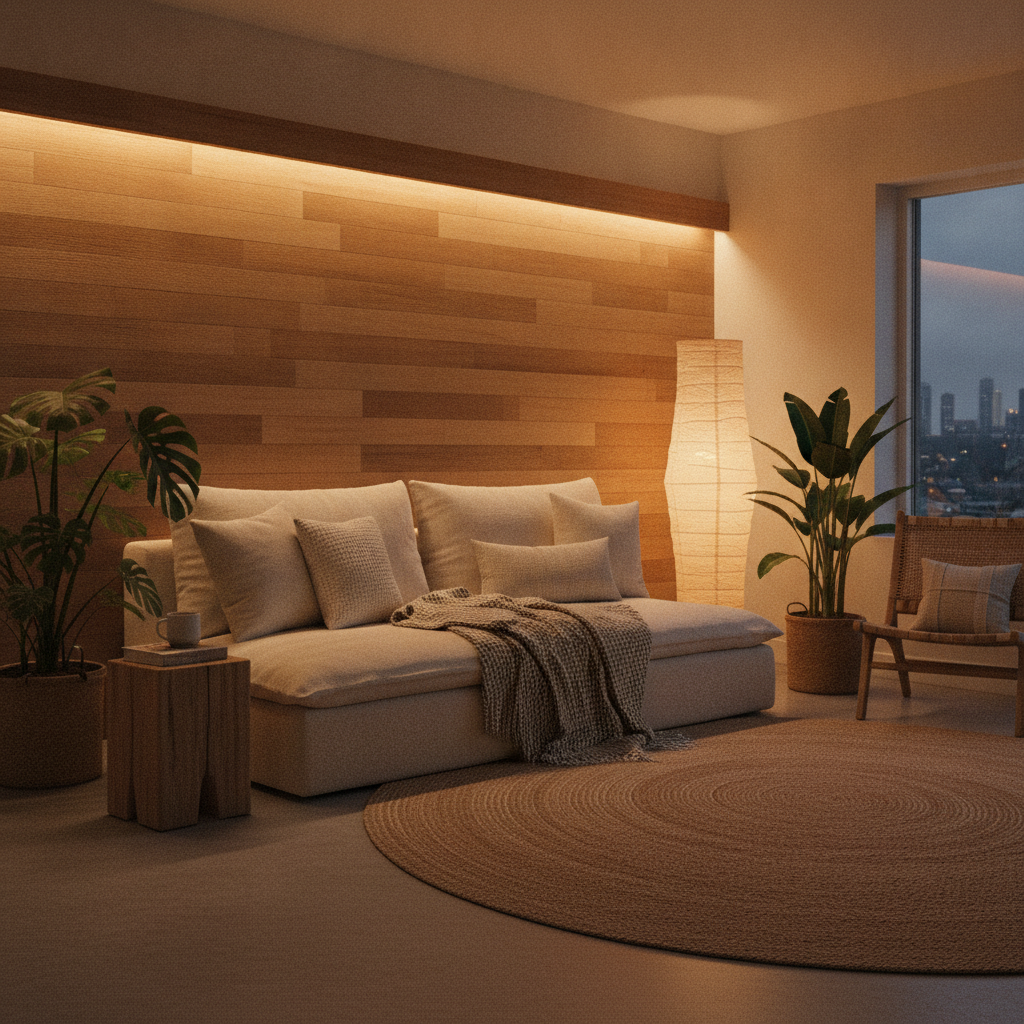
The environment a person returns to after work shapes recovery just as powerfully as sleep or nutrition. Most people give little thought to how a room actually feels to inhabit — the texture of surfaces, the quality of light, the temperature of color on a wall. When those elements are chosen deliberately, the transition from work mode to rest becomes faster, calmer, and noticeably more complete.
How Does the Brain Respond to Natural Materials?
The human nervous system evolved surrounded by organic textures — wood grain, stone, woven fiber, clay. When the brain registers these surfaces through sight and touch, it tends to dial down the low-level alertness that accumulates across a demanding workday. Research in environmental psychology consistently links exposure to natural materials with reduced cortisol activity and a quieter resting heart rate. Rooms furnished with linen, rattan, solid timber, or unsealed stone require no conscious interpretation; the body simply relaxes in a way that synthetic laminates and polished plastics rarely allow. This isn't sentimentality — it reflects genuine neurological wiring.
What Role Does Indirect Lighting Play in Decompression?
Overhead lighting, especially the cool-white LEDs common in offices and modern apartments, signals wakefulness. The brain reads bright, direct light — particularly light positioned above eye level — as midday sun, which suppresses melatonin and sustains alertness. Switching to indirect sources, such as floor lamps directed toward walls, table lamps with warm-toned bulbs, or recessed sconces set to low, changes the entire hormonal message the room sends. Brands like Flos and Hay have built design reputations partly around the principle that light positioned at or below eye level creates warmth without visual strain. The effect is immediate and requires no adaptation period.
Why Does One Room Matter More Than the Whole Home?
Redesigning an entire home feels expensive, disruptive, and easy to postpone indefinitely. Focusing effort on a single room — typically the living room or bedroom — works because the brain responds to context cues the moment it enters a space. A room that signals rest trains the nervous system to begin unwinding almost automatically upon crossing the threshold. Interior designers working in Scandinavian-influenced aesthetics have long understood this principle, building rooms where every element — from a beeswax-finished oak shelf to a wool throw — reinforces the same sensory message. One coherent room is more powerful than several half-considered ones.
How Do Texture and Color Temperature Work Together?
Color temperature and material texture operate through the same sensory pathway — they are both absorbed before conscious thought engages. Warm tones in the amber-to-terracotta range reduce perceived stimulation, and when they appear on organic surfaces like plaster walls, jute rugs, or aged timber, the calming signal compounds. Cooler neutrals in gray or blue can work when balanced with warm lighting and tactile softness, but rooms that combine cool-toned lighting with hard synthetic surfaces tend to feel clinical rather than restorative. A simple shift — replacing a bright overhead fixture with two amber-toned table lamps and adding a single natural-fiber rug — can alter the sensory character of a room substantially without structural change.
What Specific Changes Produce the Most Noticeable Results?
When approaching this type of room edit, a few changes tend to produce disproportionate returns. Replacing overhead lighting with layered indirect sources is consistently the highest-impact move. Adding one substantial natural-fiber textile — a wool throw, a linen cushion cover, a jute or sisal rug — brings tactile warmth that visually smooth rooms lack. Introducing a small amount of unfinished wood, whether through a side table, a picture frame, or even a simple wooden tray, adds organic character without visual clutter. Plants contribute both texture and a subtle psychological association with living, growing things. IKEA's SINNERLIG collection and Muji's natural material home range offer accessible entry points for each of these categories without requiring significant investment.
Where Should You Start if the Room Feels Overwhelming?
If the prospect of redesigning even one room feels like too much to take on at once, start with just the lighting. Remove or unplug the overhead fixture for a week and rely entirely on floor and table lamps set to warm-toned bulbs — 2700K is a reliable starting point. Notice how the room feels in the hour after you arrive home from work. From there, add one natural material at a time, letting each change settle before adding another. You don't need a renovation budget or a design background to make meaningful progress. Small, deliberate shifts, made one at a time, compound into a room that feels genuinely different to spend time in.
The relationship between physical environment and emotional recovery is real, well-understood, and surprisingly actionable. A room built around natural materials and soft indirect light doesn't require a complete overhaul — it requires intention. The cumulative effect of these small, considered choices is a space that works with the body's need to decompress rather than against it, turning an ordinary evening at home into genuine restoration.