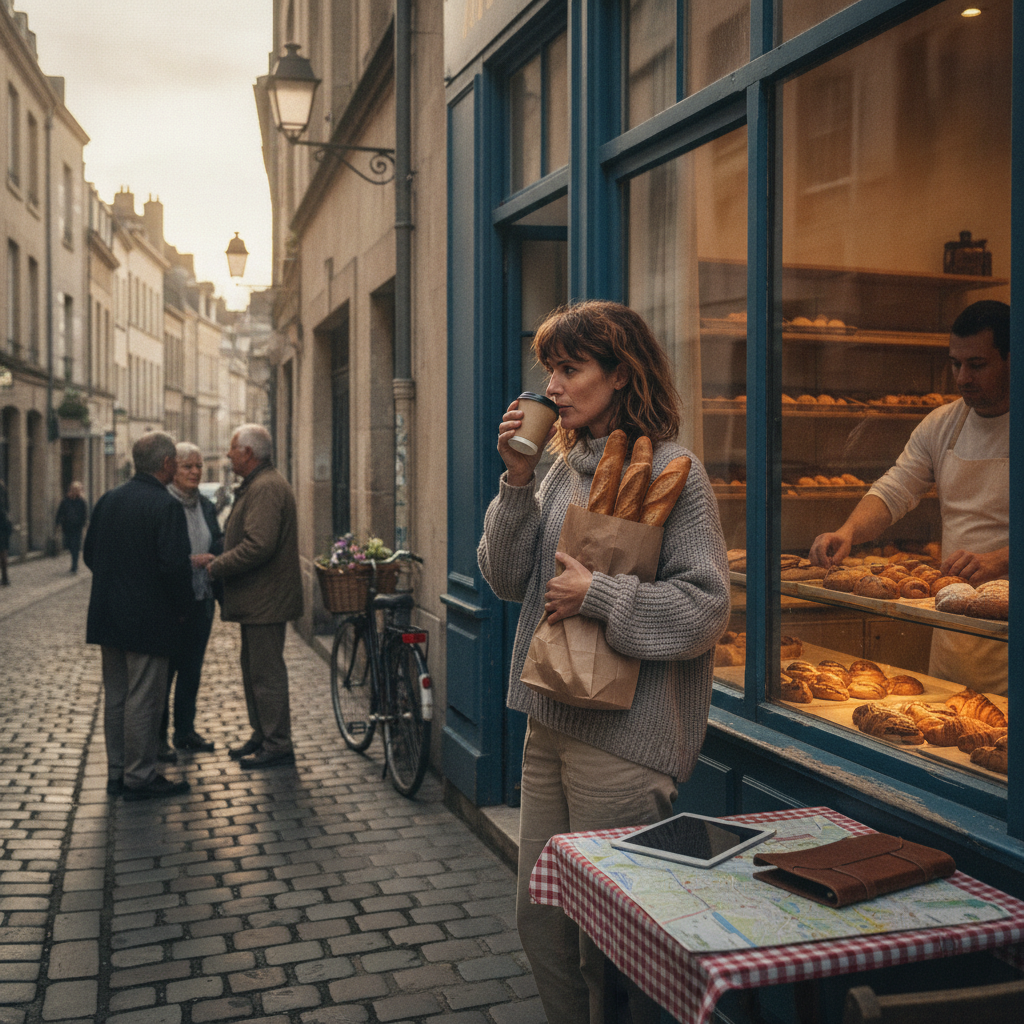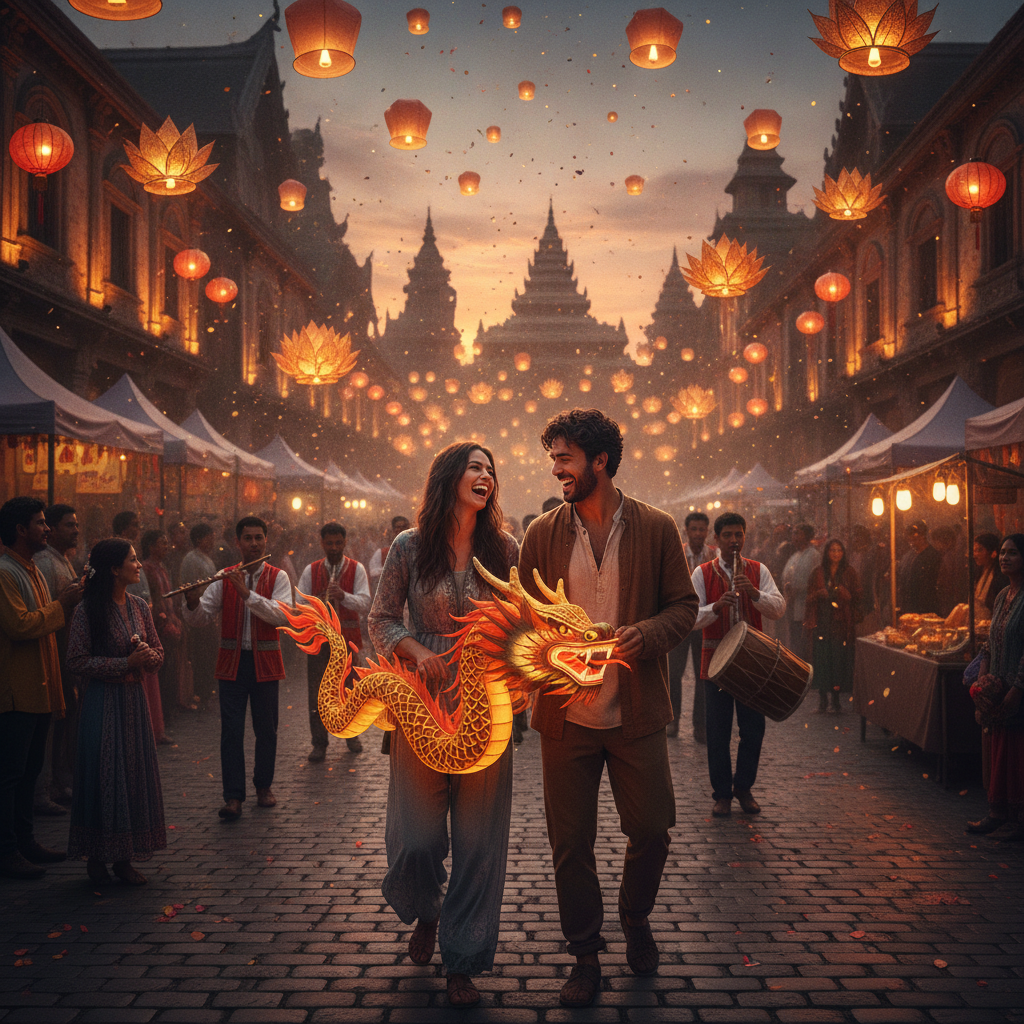
Most travelers choose a destination first and then search for things to do once they've arrived. It's a logical approach, and it produces perfectly pleasant trips — museum visits, famous viewpoints, meals at well-reviewed restaurants. But something subtler and richer tends to happen when the sequence is reversed: when a single local festival becomes the gravitational center around which everything else orbits.
This isn't about chasing novelty. It's about how the human memory works, and why experiences anchored to a specific cultural event tend to leave a deeper impression than those built around general sightseeing.
What a Festival Does That Sightseeing Cannot
A destination holds still. A festival moves, breathes, and belongs to a particular moment in time. When travelers arrive for Carnaval in Barranquilla, Colombia, or for the Pushkar Camel Fair in Rajasthan, they're stepping into a living tradition that has its own internal logic, its own schedule, its own emotional current. The streets reorganize themselves. Strangers share food and space. The social atmosphere becomes porous in a way that ordinary tourism rarely allows. Rather than observing a place from a comfortable remove, visitors find themselves genuinely inside something — present not as passive viewers but as participants in a collective experience. That sense of presence is difficult to manufacture and nearly impossible to forget.
Sightseeing, by contrast, is self-directed. The traveler moves at their own pace, consults their own list, ticks boxes they've curated themselves. There's real pleasure in that kind of freedom, but it doesn't generate the same density of shared experience that a festival naturally provides.
The Psychology of Structured Novelty
Memory researchers have long noted that experiences are encoded more vividly when they contain a mixture of novelty and structure. A festival offers both simultaneously. The unfamiliar language, food, and music provide novelty in abundance. But the festival itself provides structure — a beginning, a peak, a closing ceremony. That arc gives the memory a shape to hold.
Compare this to a week of open-ended exploration in, say, Lisbon or Kyoto. Both cities are extraordinary, and a traveler could spend years there without exhausting them. But without a central organizing event, the days can blur into a pleasant sequence that's difficult to separate in memory afterward. The meals and the walks begin to merge. The festival-centered trip, by contrast, tends to produce a story — one with a clear dramatic center that the surrounding experiences cluster around.
There's also the matter of emotional intensity. Festivals compress joy, music, ritual, and community into a concentrated window. That intensity accelerates the formation of long-term memories. Travelers who attend Semana Santa in Sevilla — the elaborate Holy Week processions that move through narrow streets in candlelit silence — often describe the experience years later with startling specificity, as if the images were burned in cleanly.
Arriving as a Witness to Living Culture
One of the quieter benefits of festival travel is what it reveals about a place that conventional tourism cannot. A festival is an act of cultural self-expression. It shows what a community chooses to celebrate, how it marks time, what it considers sacred or worth preserving. The Onam harvest festival in Kerala, India, for instance — celebrated with elaborate floral arrangements called *pookalam* and the graceful synchronized dance form known as *thiruvathirakali* — communicates something essential about Malayali identity that no museum exhibit could fully convey. The food prepared during Onam, the *sadya*, is a multi-dish feast served on banana leaves and eaten communally; it tells a story of agricultural abundance and shared belonging that a restaurant meal, however excellent, doesn't carry.
This kind of cultural immersion tends to make travelers more curious, more respectful, and more attentive than they might otherwise be. When you understand that the procession you're watching has been happening in this form for three hundred years, the experience takes on weight.
Planning Around the Festival Without Losing Flexibility
Festival-centered trips do require a particular kind of planning. Accommodation near popular festivals — think the Holi celebrations in Vrindavan or the lantern festivals of northern Thailand — fills quickly, sometimes months in advance. Building the itinerary around confirmed dates and proximity to the main events is essential. But this doesn't mean the rest of the trip needs to be rigidly scheduled.
In fact, the best approach is to treat the festival as the fixed anchor and leave the surrounding days intentionally loose. Arrive a day or two early to settle in and get a feel for the rhythms of the place before the main crowds gather. Stay a day or two after the peak, when the streets return to something like normal and locals are often more relaxed and open to conversation. This structure — loose before, centered during, quiet after — produces a natural rhythm that feels satisfying in a way that back-to-back activity rarely does.
How the Trip Finds Its Own Shape
When you build a journey around a single festival, something unexpected often happens: the rest of the trip begins to make sense in relation to it. The food you eat in the days before carries meaning because you understand what the festival celebrates. The craft you buy at a market stall becomes connected to the broader tradition you've witnessed. Conversations with locals feel more grounded because you've shown up for something that matters to them — not just passed through.
This coherence is what separates a memorable trip from a pleasant one. The experience doesn't fragment into isolated moments. It holds together as something unified, something with a clear emotional center. Travelers who return from festival-anchored trips tend to describe them not as collections of activities but as singular experiences — the kind of thing they find themselves still talking about years later.
As more travelers move away from the highlight-reel approach and toward slower, more intentional forms of tourism, festival-centered planning is likely to grow as a recognized strategy for getting more meaning from limited travel time. The shift is already visible in how tour operators and independent travel communities discuss their trips — less about how many cities were covered, and more about the specific moments that made the journey feel real.