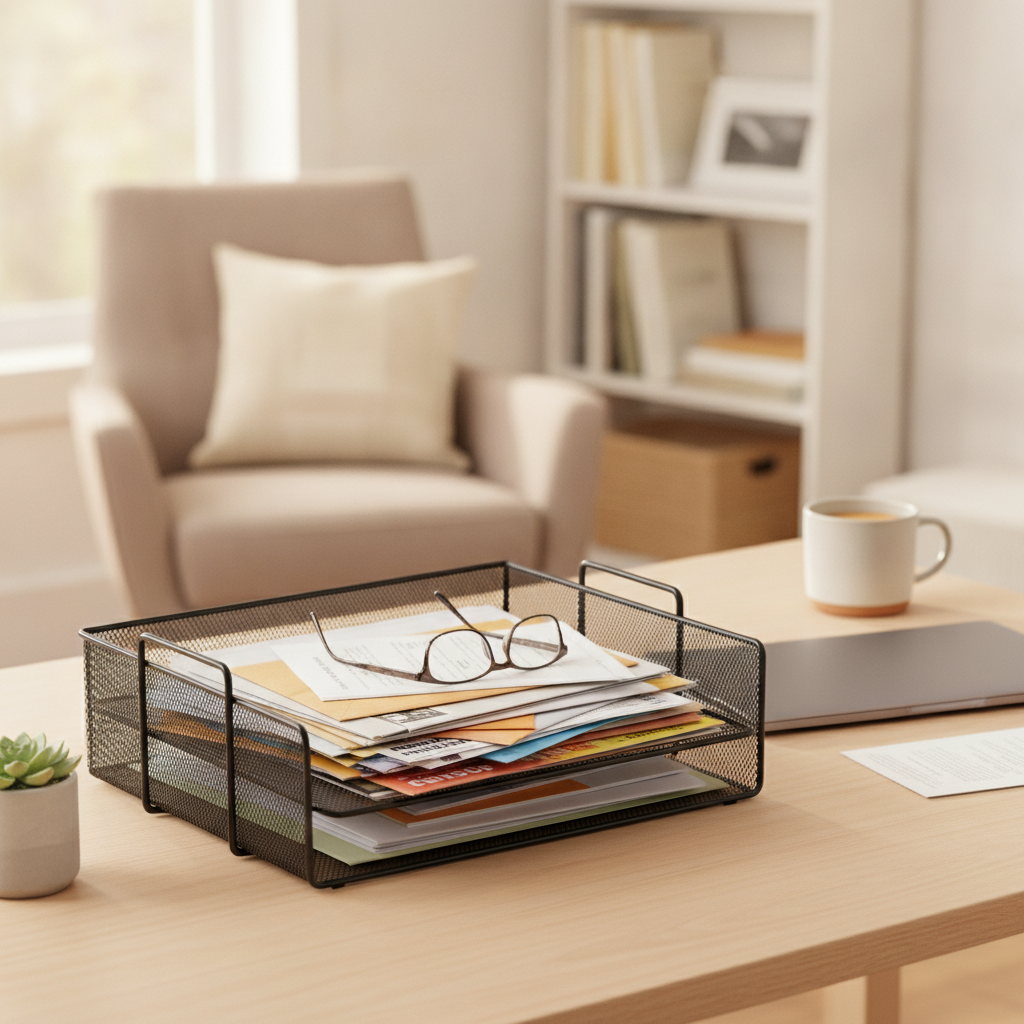
Paper has a remarkable talent for multiplying the moment you stop paying attention to it. A bill lands on the kitchen counter. A form gets set on the dining table. A receipt ends up tucked under a laptop. Before long, you're operating in a low-grade state of unease — not quite panic, but a persistent background hum of *I need to deal with that* that never fully quiets down. The good news is that one surprisingly simple tool addresses most of this: a single, dedicated physical inbox tray that catches every piece of incoming paper before it scatters.
This isn't about becoming a minimalist or overhauling your entire home. It's about creating one clear container that stands between incoming paper and the chaos it causes when left to migrate freely. The sections below walk you through how to make this system actually work for your daily life.
Choose a Tray That Earns a Permanent Spot
The tray you pick matters more than it might seem — not because aesthetics are everything, but because a tray you like is one you'll actually use. Brands like IKEA's KVISSLE and Poppin make letter trays that sit cleanly on a surface without looking like office overflow. Choose something that fits naturally in the space where paper most often enters your home: near the front door, on a kitchen counter, or at a dedicated desk. When the tray looks intentional and feels right in its spot, it becomes a fixture rather than a temporary fix you abandon after two weeks.
Establish One Non-Negotiable Drop Zone
The entire premise of a single inbox only works if you commit to using it exclusively. That means every piece of incoming paper — mail, school forms, takeout menus, receipts, flyers, bills — goes directly into the tray before it touches any other surface. This sounds simple, but it requires a conscious interruption of old habits. The first few days, you'll catch yourself starting to set something on the counter and redirecting to the tray instead. That small redirection is the whole system working. Once the habit is automatic, the mental relief follows quickly.
Set a Weekly Processing Time That Isn't Negotiable
An inbox tray without a regular clearing schedule becomes just another pile. Pick one consistent time each week — Sunday evening works well for many people, or Friday afternoon if you want to close out the week clean — and commit to processing everything in the tray during that window. Processing doesn't mean solving every problem; it means sorting items into categories: act on, file, or discard. Most weeks, this takes under fifteen minutes. Knowing that a processing window is coming also reduces the anxiety of watching items accumulate, because the tray is a holding zone, not a permanent destination.
Keep a Small Recycling Bin Directly Beside the Tray
A large percentage of what lands in your inbox is junk mail, expired coupons, and paper you genuinely don't need. When a recycling bin sits right beside the tray, you can intercept these items immediately or dispatch them during your weekly sort without any friction. The shorter the distance between the tray and the recycling bin, the less likely you are to keep things out of inertia. Some people also keep a small shredder nearby for anything containing personal information — a setup that handles the full range of paper in one tidy corner.
Create a Simple Two-Folder System Downstream
The inbox tray is a capture tool, not a filing system. Once something has been processed, it needs somewhere specific to go. A two-folder approach — one labeled *Action* for items requiring a response or follow-up, and one labeled *Reference* for documents you might need later — covers most household paper without demanding an elaborate filing cabinet. Pendaflex makes affordable hanging folders that work inside a small desktop organizer. When you know exactly where processed paper lives after it leaves the tray, the whole system stays clear and self-maintaining.
Train Everyone in Your Household to Use It
A single-person inbox system is straightforward. A shared household adds complexity, but the principle holds. The tray works best when everyone who lives with you knows that it's the designated landing spot for any paper that enters the home. A brief, low-key conversation — not a lecture — is usually enough to align expectations. If you have children, framing it as a simple rule rather than a preference makes it easier to maintain. When the habit is shared, the tray becomes a household norm rather than one person's personal project.
Resist the Urge to Over-Complicate the System
One of the most common ways people undermine a working paper system is by expanding it too quickly. Multiple trays for different categories, color-coded folders, elaborate labeling — all of these add friction and decision points that slowly erode the habit. The power of a single inbox tray is its simplicity. It removes the question of *where does this go?* entirely. Keep the setup as plain as possible for at least the first month. Once the core habit is solid, you can always add small refinements if a genuine need surfaces.
Review What's Accumulating to Catch Patterns Early
After a few weeks of consistent use, your inbox tray becomes a useful diagnostic tool. If certain categories of paper keep piling up — unpaid bills, unread statements, forms that need signatures — that's a signal worth paying attention to. Rather than judging yourself for the backlog, treat it as useful information. Maybe a particular recurring task needs to move to your calendar. Maybe you'd benefit from switching a bill to paperless delivery. The tray surfaces these patterns in a way that scattered paper never does, giving you a concrete starting point for small improvements.
Starting with a single tray and a consistent weekly habit is genuinely enough to shift the texture of your home environment. The low-grade anxiety of wondering where you left that form, or whether you've missed something important, tends to dissolve once paper has one clear home. Pick a tray, find its permanent spot, and let the system do the rest.