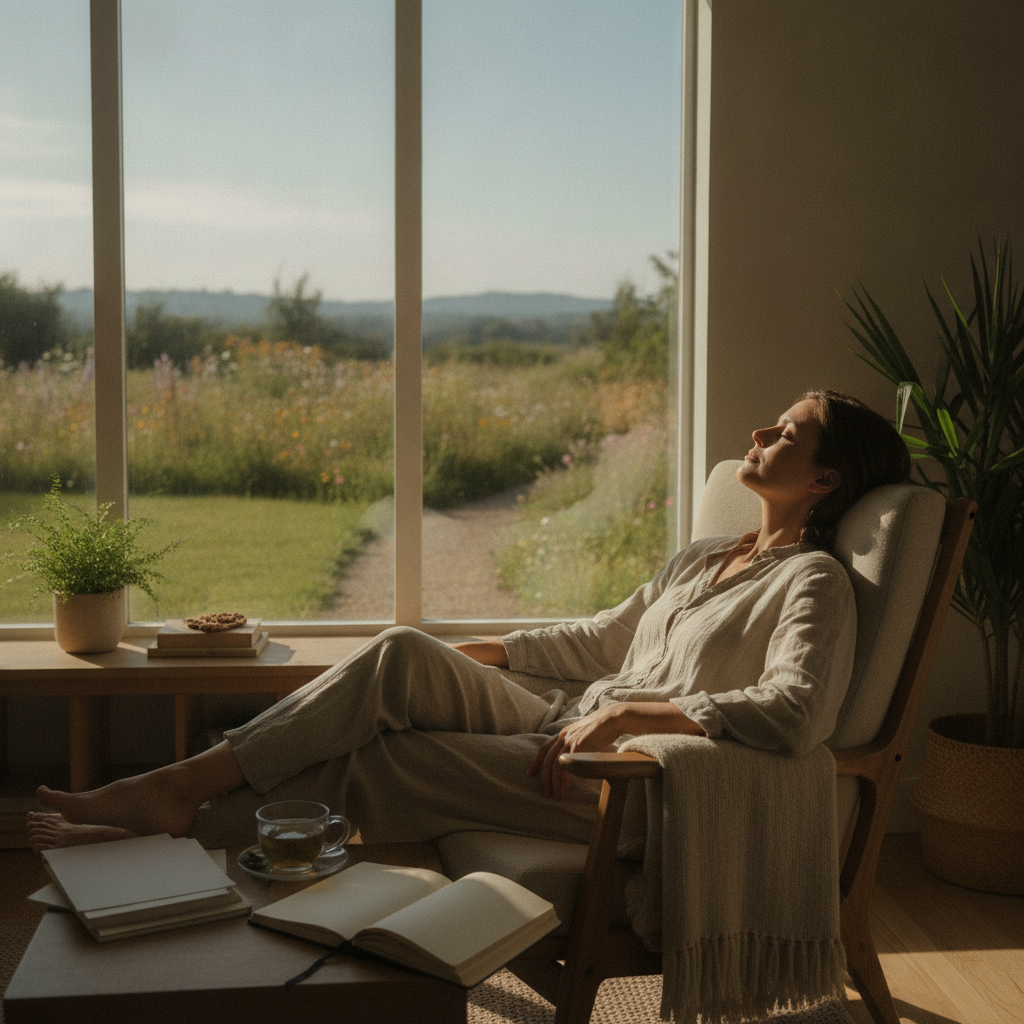
Modern life has become exceptionally skilled at filling every available hour with something useful, measurable, or optimized — and in doing so, it has quietly crowded out a quality of mental experience that most people don't notice is missing until it's been gone for a very long time. That quality has no clean productivity metric. It doesn't show up in a habit tracker or generate a sense of accomplishment at the end of the day. What it does generate, for those who protect it, is a kind of interior room — a spaciousness of mind that makes everything else feel less compressed, less urgent, less relentlessly sequential.
The Slow Erosion of Inner Stillness
Productivity culture doesn't announce its costs. It arrives wearing the reasonable face of efficiency, offering better mornings, tighter schedules, and optimized routines — and these things genuinely help. But they also train the mind to experience any unmarked hour as a problem to be solved. Over months and years, the reflex to fill time becomes automatic. Apps like Todoist and Notion, both genuinely useful tools, can subtly reinforce the belief that an unscheduled block is an inefficiency rather than a resource. The mind loses its tolerance for open time, and with it, a certain ease that used to arrive naturally.
What Unstructured Time Actually Does to the Brain
When the mind is released from task orientation — not resting, not meditating, simply wandering without agenda — it activates what neuroscientists call the default mode network, a pattern of brain activity associated with self-reflection, creative insight, and the integration of experience. This isn't passive emptiness; it's a distinct and necessary mode of mental processing. People who allow this kind of time regularly tend to notice a quieter background hum of anxiety, a greater capacity for original thought, and a more relaxed relationship with uncertainty. The mind, it turns out, does important work when it isn't working toward anything in particular.
The Cultural Precedent for Purposeless Time
Many cultures have historically protected this kind of time through formal or informal structures. The Italian concept of *dolce far niente* — literally "the sweetness of doing nothing" — isn't laziness dressed up in romantic language; it's a genuine philosophical stance toward rest as inherently valuable. The Danish practice of *hygge* (a sense of cozy, unhurried presence) similarly carves out emotional space that isn't organized around output. Even the traditional English Sunday, now largely dissolved into errand-running and inbox management, once served as a cultural container for exactly this kind of undemanding time. These weren't accidents of culture — they were functional practices for maintaining psychological equilibrium.
Why One Afternoon a Month Is the Right Scale
A single unstructured afternoon each month is neither too ambitious nor too infrequent to feel meaningful. It's modest enough to actually protect from competing obligations, yet regular enough to become something the mind anticipates rather than forgets. Weekly unstructured time, while ideal in theory, often collapses under the weight of practical life — groceries need buying, children need attending, commitments accumulate. Monthly feels achievable. It also creates enough distance between each instance that the afternoon carries a sense of occasion, a small recurring gift that doesn't fade into background habit the way daily rituals sometimes do.
How to Protect the Afternoon Without Filling It
The practical challenge isn't finding the time — it's resisting the pull to structure it once it arrives. Blocking it on a calendar helps, but so does setting a deliberate boundary around what the afternoon excludes: no tasks, no errands, no self-improvement goals, no planned socializing. Neighborhoods like Brooklyn's Carroll Gardens or London's Stoke Newington — places with unhurried cafés, bookshops, and parks within walking distance — offer natural environments for this kind of time, but the location matters less than the intention. The afternoon might include a slow walk, aimless reading, sitting somewhere pleasant without purpose. What it shouldn't include is a plan for what it ought to produce.
The Effect on the Weeks Surrounding It
Something interesting tends to happen in the days following an unstructured afternoon: a mild but perceptible shift in how time feels. Tasks that seemed urgent beforehand often look more proportionate afterward. Creative problems that felt stuck sometimes resolve without effort, having apparently worked themselves out during the wandering hours. There's also a subtle change in the texture of ordinary days — a slightly wider margin of patience, a reduced tendency to treat every open moment as something to fill. The afternoon doesn't just restore spaciousness during its own hours; it leaves a residue that colors the weeks around it.
Reclaiming the Hours That Belong to No Agenda
If you've spent months — or years — treating every afternoon as a container for productivity, the first genuinely unscheduled one will feel strange. There may be restlessness, a reaching for the phone, a subtle guilt that arrives uninvited. These responses are worth sitting with rather than resolving, because they point directly at what has been lost. The mind that can't tolerate open time without discomfort is a mind that has forgotten what it feels like to simply be present without purpose — and that forgetting carries a cost that no number of optimized routines can offset. The invitation isn't to abandon ambition or productivity, but to remember that the mind needs unoccupied territory the way a city needs parks: not as wasted space, but as the condition that makes everything else livable.
The broad, quiet truth that opens this conversation is also the one that closes it. Life fills to the edges of whatever container you hand it. Scheduling one afternoon each month with no tasks, no goals, and no agenda is an act of deliberate refusal — a small, recurring insistence that not all time needs to be claimed, organized, or made useful. That insistence, practiced consistently, gives back something that productivity culture takes slowly and without announcement: the simple, irreplaceable experience of a mind that has room to breathe.