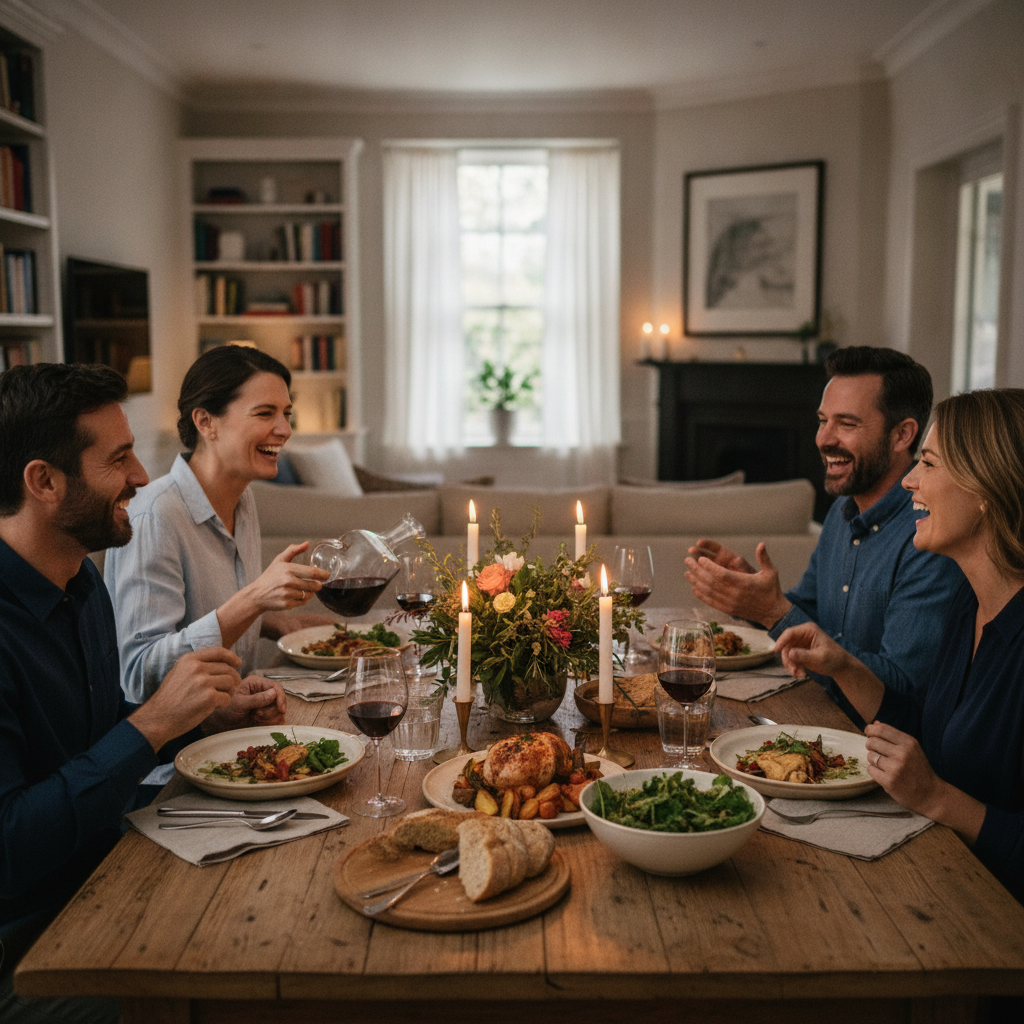
Quantity has a way of masquerading as richness, especially in social life. A person can move through dozens of casual gatherings in a month — rooftop drinks, birthday dinners at loud restaurants in neighborhoods like Williamsburg or Shoreditch, after-work drinks that stretch past their welcome — and still arrive home feeling vaguely empty. The modern social calendar, packed as it often is, doesn't guarantee genuine connection. What it guarantees is motion.
What Does Depth Actually Mean in Friendship?
There's a concept in sociology called *weak ties* — the acquaintances and casual contacts that make up the broad outer ring of a person's social world. Weak ties are useful. They carry information, open doors, and provide a pleasant sense of belonging to something larger. But they're not what sustains people emotionally. That work is done by strong ties — the friendships built on sustained attention, shared vulnerability, and time that doesn't feel rushed. Most casual invitations feed the former category. A monthly dinner at home, carefully prepared and intentionally small, tends to build the latter.
Why the Setting of a Home Changes Everything
Restaurants are designed for transaction. They move people through courses, manage noise levels for efficiency, and create an environment that subtly discourages lingering. A home does none of this. A home says: there is no table waiting after yours, the wine can sit open on the counter, and the conversation can go wherever it needs to go. Anthropologists refer to this as *threshold hospitality* — the particular warmth and trust that comes from being welcomed past someone's front door. It signals a different level of care than handing over a credit card at the end of a shared meal.
How Does Hosting Shape the Host?
The person who sets the table, chooses what to cook, and thinks deliberately about who might enjoy sitting next to whom is exercising a set of social muscles that passive attendance never develops. Hosting requires a kind of *mise en place* — a French culinary term meaning everything in its place before the work begins — that applies equally well to social life. The host thinks ahead. They consider the atmosphere, the pacing, the flow of the evening. Over time, this deliberate thinking about connection makes the host more attuned to the needs of relationships in general, not just within their own walls.
Why Saying No to Some Invitations Is a Social Strategy
There's mild cultural pressure to say yes — to be available, flexible, and easy. Declining invitations can feel like social withdrawal, or worse, arrogance. But the evidence of lived experience suggests that protecting time and energy for a few well-chosen interactions produces stronger relationships than spreading attention thin. The person who attends everything often brings a fractured version of themselves to each event. The person who attends selectively arrives present. Choosing one meaningful evening each month over four forgettable ones isn't antisocial — it's a quiet form of respect for what friendship actually requires.
What Makes a Small Dinner Work?
The details matter less than the instinct to keep things simple and real. Four to six guests tends to be the sweet spot — enough for interesting conversation to move across the table, small enough that no one gets lost. The food doesn't need to be elaborate. A slow-cooked dish from a trusted source like *The Silver Spoon* or a simple pasta made in the style of Rome's Trastevere neighborhood does the work just as well as anything ambitious. What guests remember isn't the menu. They remember whether they felt seen, whether the conversation went somewhere interesting, and whether they left feeling genuinely glad they came.
How Ritual Transforms Routine Into Meaning
When something happens once a month on a rough schedule, it takes on the quality of *ritual* — a word whose original Latin root, *ritualis*, referred to a prescribed set of actions performed with care and intention. Rituals create anticipation. Regular guests begin to look forward to the evening weeks in advance. The host develops a quiet rhythm around it — sourcing something seasonal at the farmers' market, texting the group a few days before, clearing the table with a bit more care. That rhythm, repeated over months and years, becomes part of the texture of a life. It becomes something people genuinely mourn when it stops.
How Do You Actually Start?
You don't need a perfectly set table or a dining room with the right lighting. You need a date, three or four people you'd genuinely like to spend an evening with, and something warm on the stove. Pick a weekend evening that you'd otherwise spend scrolling, send a message to a small group of people — friends who don't often see each other, or who you've been meaning to reconnect with — and keep the plan simple enough that it doesn't become a project. The first one doesn't need to be polished. It just needs to happen.
There's something quietly radical about choosing to gather people in your own home, on your own terms, with real attention paid to the experience. It's a rebuke to the exhausting pace of modern socializing — not a bitter one, but a gentle and confident one. The people who make this a monthly habit tend to find that their social lives feel smaller in number and richer in every other way that matters. That trade, it turns out, is one of the better ones available.