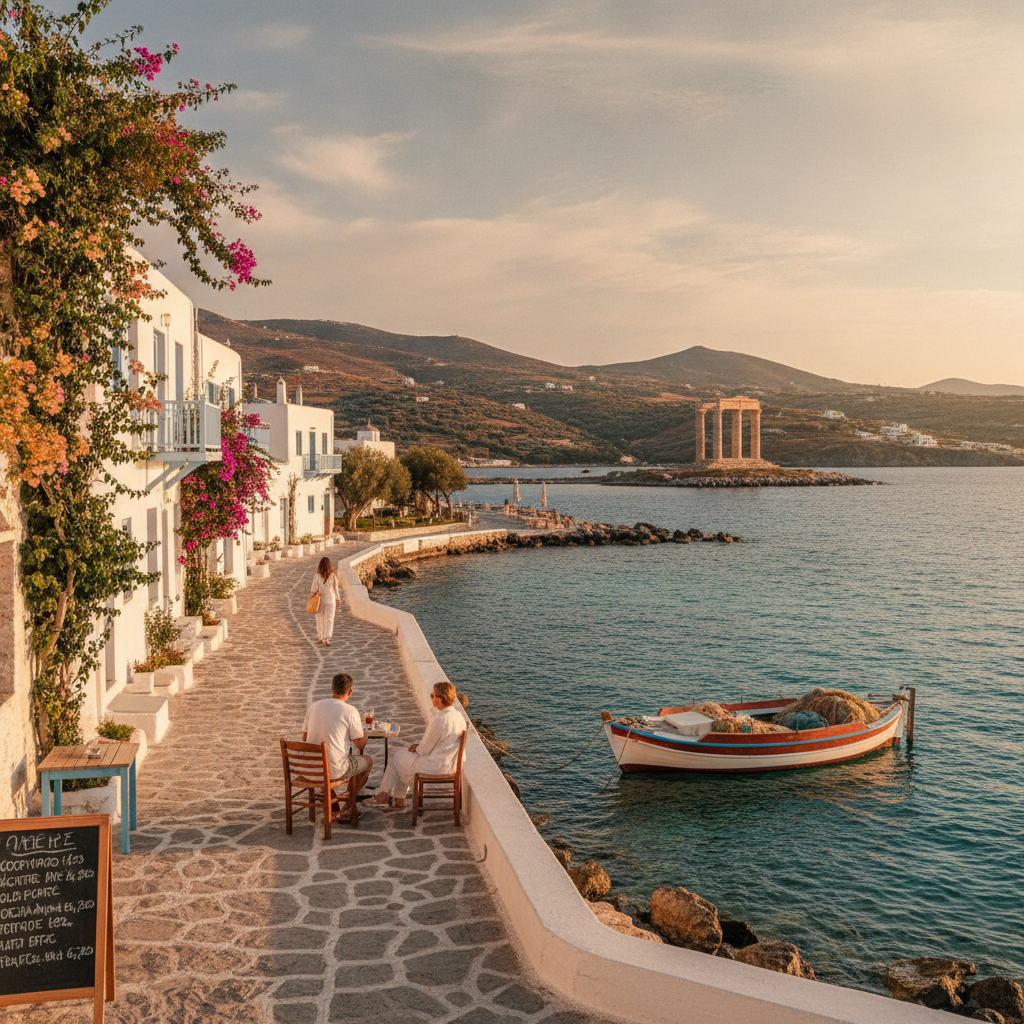
There is a version of the Greek islands that most visitors never encounter — one where the ferries aren't crowded, the taverna owner remembers your name by the second evening, and the light over the Aegean holds that particular early-summer quality that photographers spend entire careers chasing. This version exists, and it's accessible every year to anyone willing to arrive before the rest of Europe does. The window between Orthodox Easter and the last week of June is narrow enough to feel like a secret and long enough to plan around properly, and understanding why it works so well changes how you think about timing travel in general.
The Logic of the Shoulder Window
Orthodox Easter falls later than the Western calendar celebration, typically landing somewhere between mid-April and early May depending on the year. In the weeks immediately following it, something shifts across the islands. Businesses that closed through winter reopen, ferry schedules expand, and the infrastructure of Greek island life comes back into full operation — but the tourist volumes that characterise July and August haven't arrived yet. The sea temperature is still climbing toward its summer peak, which suits those who prefer exploring coastlines on foot or by scooter over spending entire days on packed beaches. Accommodation prices reflect the quieter occupancy rates, and you'll find that properties listed on platforms like Booking.com show availability and rate structures in this window that bear almost no resemblance to what the same rooms cost six weeks later.
What makes the logic especially compelling is that the islands themselves are functioning at full capacity during this period. Restaurants have their full menus, boat tours are running, and the markets in places like Naxos Town or the old port of Skiathos are stocked and active. You're not trading comfort for price — you're simply arriving before the demand curve steepens. The experience isn't a reduced version of peak summer; in many ways, it's a more complete one, because the people who make these islands worth visiting — the people who actually live there year-round — are still visible and accessible rather than retreating behind the demands of a season at full tilt.
Ferries, Flights, and Getting There
The practical case for this window extends to how you get there and move between islands. Ferry routes between Athens' port of Piraeus and the major island clusters run on expanded summer schedules from late April onward, meaning you have genuine flexibility without the midsummer scramble for tickets. Searching across Google Flights or Skyscanner in the March-to-April planning window typically surfaces fares to Athens that sit noticeably below what the same routes command in late June and July. The difference isn't marginal — it's the kind of gap that funds several extra nights of accommodation or changes the island count in your itinerary entirely.
Moving between islands during this shoulder period also carries a different texture. On a ferry from Santorini to Folegandros in late May, the deck isn't a choreography of selfie sticks and reservation disputes — it's quiet enough to watch the caldera shrink behind you and feel the crossing as the unhurried transition it was always meant to be. That quality of movement, that sense of pace, is genuinely difficult to purchase at any price point during peak season, regardless of how much you're willing to spend on private transfers or upgraded cabins.
Accommodation and Daily Costs
The pricing dynamics of Greek island accommodation reward early arrivals in ways that compound across a longer trip. Family-run guesthouses and small hotels — the category that defines the best of what these islands offer — tend to price their shoulder-season rates at levels that make a ten-day stay feel accessible rather than aspirational. Platforms like Airbnb often show entire apartments and traditional stone houses in villages like Apiranthos on Naxos or Chorto on the Pelion peninsula at rates that would be unthinkable by the time July arrives. Booking directly through a property's own contact, often listed on Tripadvisor alongside the third-party options, can unlock further flexibility, particularly for longer stays where owners are genuinely motivated to fill the calendar before their premium weeks begin.
Daily costs follow the same pattern. The fish tavernas along working harbours haven't yet adjusted their menus to tourist-season pricing, the local buses run on schedules built for residents rather than resort transfers, and the hire of a small boat or scooter for a day — the most liberating way to explore an island's quieter coves — comes without the waiting lists and inflated demand fees that August generates almost automatically.
What the Timing Reveals About the Islands Themselves
There's an argument to be made that the shoulder period doesn't just make the islands more affordable — it makes them more legible. When Mykonos or Paros isn't operating at full tourist-season intensity, the underlying rhythms of these places become readable in ways that peak-season visitors simply don't have access to. The morning coffee culture, the afternoon closure that still governs most local businesses, the evening volta along the waterfront — these things exist in summer too, but they're harder to see when the foreground is dense with crowds and the noise level has climbed to match.
Arriving in this shoulder window, you find yourself sharing these rhythms rather than observing them from a distance. It's the difference between being a guest in a place and being a temporary resident of it, and that distinction shapes what you carry home from a trip far more durably than any number of landmark photographs.
Planning the Itinerary Practically
For anyone putting this window to use, the planning sequence matters. Locking in flights and at least the first two nights of accommodation three to four months out gives you the best combination of availability and price. From there, leaving the inter-island routing loosely structured — with ferry times checked via Ferryscanner or the Greek ferry operator websites — allows for the kind of spontaneous extension that turns a good trip into one you talk about for years. The shoulder period is forgiving in this respect: because you're not competing with peak-season volumes, the last-minute ferry ticket and the walk-in guesthouse inquiry are genuinely viable strategies rather than optimistic fantasies.
The Greek islands in that calm stretch between the Orthodox Easter weekend and the first heat of late June offer something that peak-season bookings, however well-funded and carefully planned, simply can't replicate: the sensation of arriving somewhere before the version of it that exists for tourists has fully taken over, when the place is still, in the most honest sense, itself.