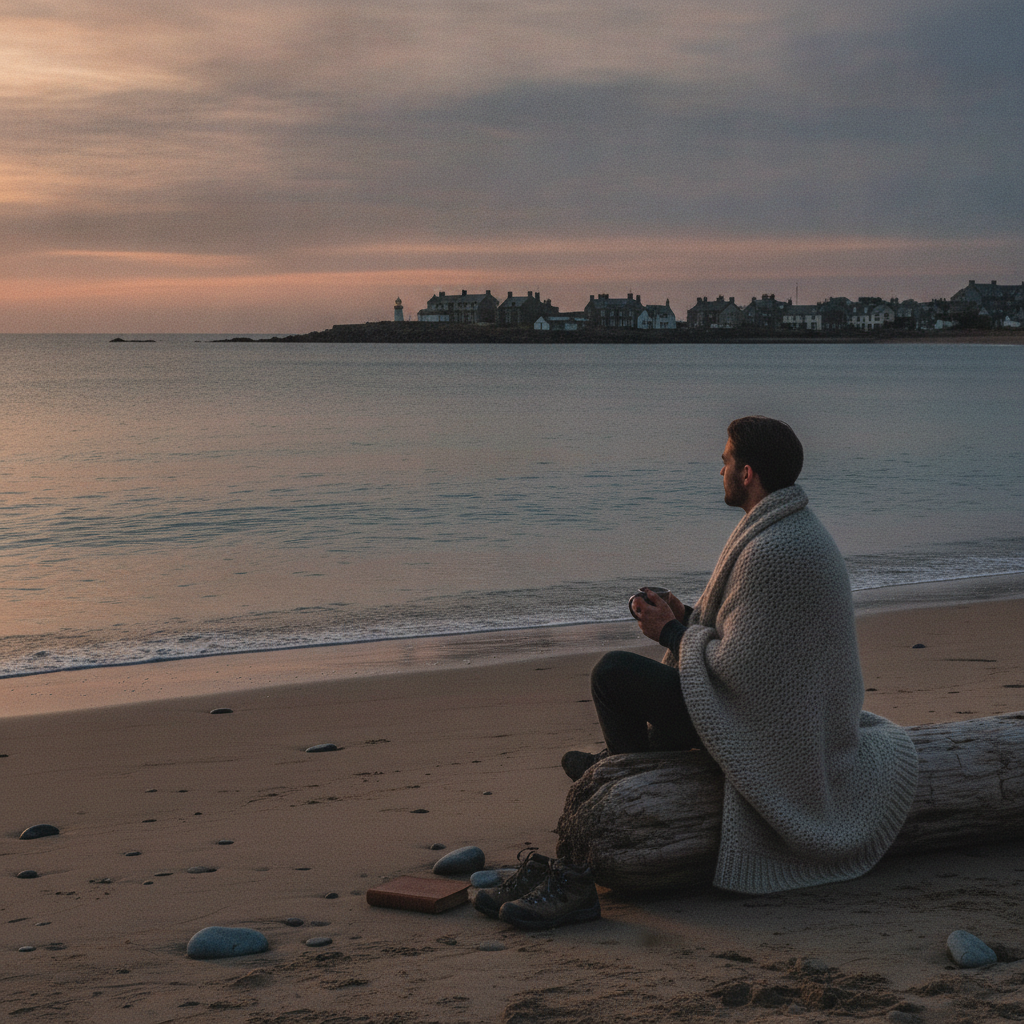
Most travelers return from a trip feeling like they need another one. The itinerary was full, the photos are beautiful, and yet somewhere between the third city and the fifth check-in, the rest they went looking for quietly slipped away. There's a different approach — one that trades momentum for stillness, and multiple stamps for a single, unhurried place — and it tends to produce something most travel itineraries can't: a genuine sense of having actually stopped.
Why the Off-Season Coastal Town Earns Its Reputation
A coastal town in late autumn or early winter is a fundamentally different place from the version that appears in summer travel guides. The cafés are quieter, the proprietors are more present, and the rhythm of daily life reasserts itself after months of catering to peak-season crowds. Towns like Cascais in Portugal, Paros in Greece, or Essaouira in Morocco take on a slower, more honest character in the off-season — one that's far easier to actually inhabit rather than merely photograph. Accommodation rates drop, restaurants become easier to get into, and the people you encounter tend to be locals rather than fellow tourists comparing notes on the same highlight reel.
The Atmosphere That Opens Up When the Crowds Leave
There's a texture to an off-season coastal town that simply isn't available in July. The light shifts earlier, the streets empty by mid-evening, and the sound of the sea becomes something you actually hear rather than register as background noise behind restaurant chatter. For travelers who arrive expecting this — rather than resisting the quieter pace — it quickly becomes the entire point. The absence of crowds isn't a drawback; it's the condition that makes rest possible in the first place.
The Logic of Ten Days in a Single Place
Ten days in one location is long enough for the rhythm of a place to become familiar, but not so long that restlessness sets in. By day three, you know which bakery opens earliest and which path along the waterfront catches the best morning light. By day five, you've stopped consulting your phone for every decision. By day seven, the town has started to feel, in a small but meaningful way, like somewhere you belong temporarily — and that shift in psychological orientation is exactly what separates genuine rest from scheduled activity. Apps like Airbnb and Booking.com make finding a well-situated apartment or guesthouse straightforward, and staying in one place for ten days often unlocks weekly rates that make the choice financially sensible as well.
What the Body Actually Does With Unbroken Time
When you don't move on after two or three nights, your nervous system stops preparing to leave. You unpack fully. You sleep according to the natural light rather than an alarm calibrated to a transfer schedule. You eat at the same table, walk the same streets, and slowly stop treating every moment as something to optimize. This is not laziness — it's the biological process of decompression, and it requires unbroken time to complete. A week of consecutive nights in one place produces a qualitatively different kind of rest than the same number of nights spread across four destinations.
Planning the Stay Without Overplanning the Days
The practical groundwork for this kind of trip is lighter than most people expect. Choosing the destination thoughtfully matters more than building an activity list. Tools like Google Flights and Skyscanner make it easy to find affordable routes into regional airports near smaller coastal towns, often at a fraction of peak-season fares. Beyond the flight and accommodation, the planning stops. One or two loose intentions — a local market to visit, a coastal path to walk, a restaurant district to explore slowly — is enough structure to prevent aimlessness without turning the trip into a second schedule.
Timing the Trip to the Town's Natural Calendar
Off-season doesn't mean the same thing everywhere, and understanding a destination's specific shoulder period matters. In southern Portugal, October and November bring warm days, calm seas, and dramatically reduced visitor numbers. In the Algarve, many seasonal businesses remain open through November before a true winter quiet sets in. Checking local event calendars before booking — even briefly — helps you arrive during a week when the town has something gentle to offer: a harvest festival, a film screening series, a weekly market that draws locals rather than vendors selling to tourists. The idea is to sync with the town's rhythm rather than impose your own.
What You Actually Bring Home From This Kind of Trip
The rest you carry back from a ten-day coastal stay is different in kind from what comes back with a packed multi-city itinerary. It tends to be quieter and more durable — a genuine lowering of baseline tension rather than a temporary spike of novelty followed by re-entry fatigue. You return knowing one small stretch of coastline with some intimacy, having learned the names of a few streets, having eaten in the same place twice because you wanted to rather than because you ran out of options. That knowledge — modest, local, unhurried — turns out to be what rest actually feels like when it's had time to settle.
The Compound Effect of Returning to the Same Destination
Some travelers who try this approach once find themselves returning to the same off-season town the following year, and the year after that. The familiarity compounds in ways that are hard to anticipate until you've experienced them: the check-in is frictionless, the adjustment period vanishes, and the rest begins almost immediately upon arrival. There's no shame in returning somewhere you already know. In fact, for travel designed around rest rather than novelty, repetition is one of the most underrated strategies available.
The shift toward slower, more deliberate travel has been building quietly for several years, and the off-season coastal stay sits near its center. As more travelers recognize the gap between a trip that looked good and a trip that actually helped, the appeal of committing to one unhurried place — choosing depth over distance — will only become clearer. The next opportunity to plan this kind of trip is closer than it seems, and the only real requirement is the willingness to stop moving long enough to actually arrive.