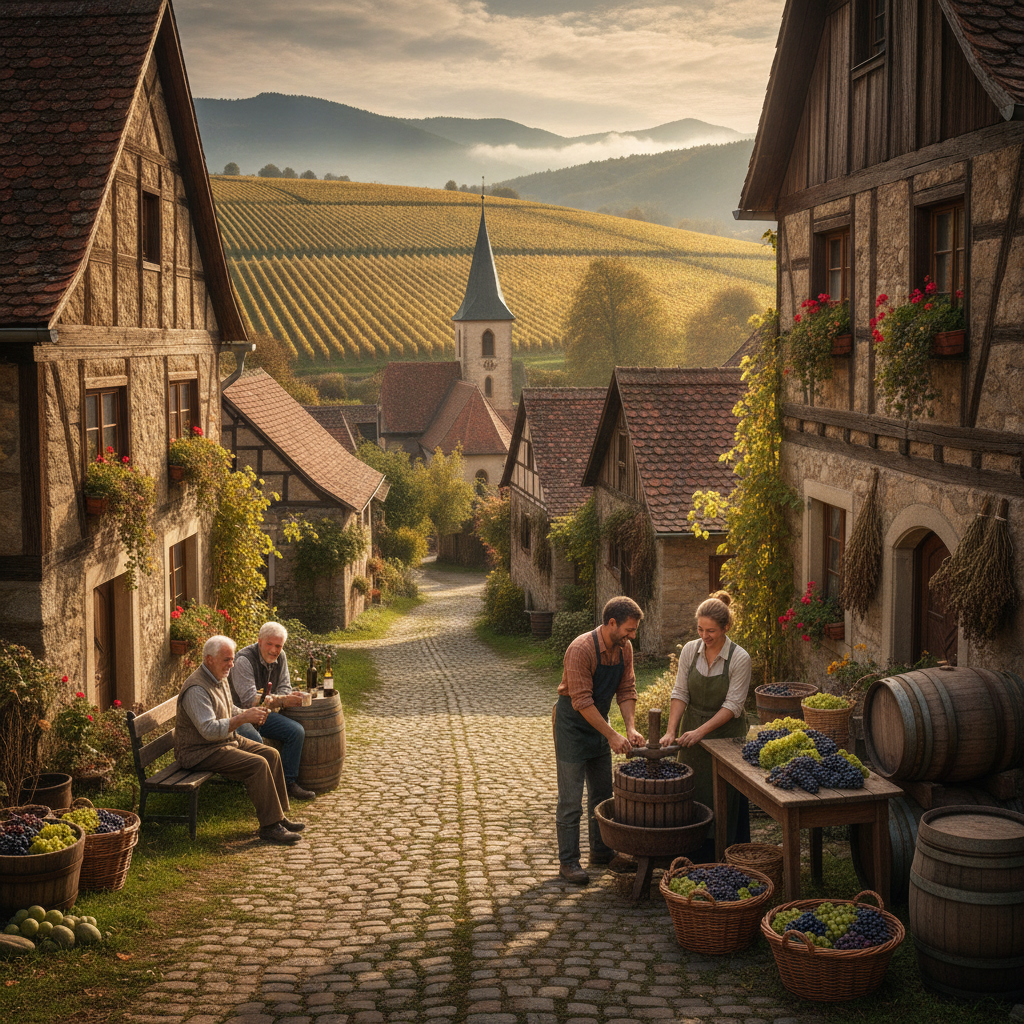
There is a particular kind of travel disappointment that settles in quietly — not dramatically, but slowly, across the second or third day of a trip spent in a European capital that looked completely different in the photographs. The wide squares are there, the famous facades are intact, but so are the tour groups, the laminated menus translated into six languages, and the steady hum of a city performing itself for an audience. For travelers drawn to Central Europe in autumn, there is a compelling alternative that most itinerary guides overlook entirely: the wine harvest village, tucked into a hillside valley, where the season itself becomes the reason to be there.
When the Calendar Shapes the Destination
The Harvest as a Living Cultural Event
Autumn harvest season in Central Europe — running roughly from mid-September through late October depending on the region and year — transforms rural wine-producing areas in ways that no museum or monument can replicate. In countries like Austria, Hungary, and the Czech Republic, villages that spend most of the year in quiet agricultural rhythm suddenly become the center of regional social life. Cellars open their doors, local families set up informal tastings in their courtyards, and the air carries the faintly sweet, slightly fermented scent of pressed grape must. You are not observing a tradition from behind a velvet rope — you are standing inside it, buying a glass from the person who grew the grapes.
Why the Capital Cannot Offer This
Capital cities absorb and dilute regional identity. Vienna is magnificent, Budapest is extraordinary, and Prague is one of the most visually coherent cities in Europe — but none of them are wine villages, and none of them carry the particular seasonal texture that comes from being embedded in a producing landscape. The harvest festivals that occasionally appear in capital city event calendars are approximations, imports of a rural moment into an urban setting. They can be enjoyable, but they are fundamentally different from arriving in a village like Rust on Austria's Lake Neusiedl or Eger in northern Hungary's wine country, where the harvest is not a programmed event but an ongoing, slightly chaotic, entirely genuine process.
The Quiet Dividend of Choosing Secondary Places
Fewer Visitors, More Space to Notice Things
The practical reality of visiting wine harvest villages in autumn is that the crowds you would encounter in a capital city simply do not materialize here. Regional tourism infrastructure in Central European wine country is well-developed enough to be comfortable — good guesthouses, reliable local restaurants, well-marked walking trails — but it has not yet been optimized for mass throughput. The villages that dot the Wachau Valley in Austria or the Tokaj wine region straddling the Hungary-Slovakia border receive visitors who are largely regional: Austrian weekenders, Hungarian day-trippers, the occasional German cycling group. International travelers are a minority, which means the social dynamic of a place has not reorganized itself around their expectations.
The Texture That Slows You Down
Smaller wine villages reward a slower pace in ways that city itineraries rarely allow. A morning walk between two villages along a vineyard ridge, an unplanned conversation with a winemaker who speaks just enough English to explain why this year's Furmint is better than last year's, a lunch of roast goose and red cabbage at a roadside Heuriger in the Kamptal — these are not experiences you can schedule through an app, but they are the ones that stay with you. The rhythm of a harvest village in autumn is generous in this way: it moves at a speed that matches curiosity rather than demanding you keep pace with it.
Planning the Practical Side Without Losing the Spontaneity
Tools That Help Without Over-Structuring
Building an itinerary around wine harvest villages does not require abandoning the practical tools that make travel logistics easier — it simply means using them differently. Google Maps is genuinely useful for identifying the cluster geography of wine regions, helping you understand which villages sit within comfortable walking or cycling distance of each other and which require a regional train or local bus. Komoot is worth downloading before you leave, particularly if you plan to explore vineyard walking trails between villages — its offline map functionality and trail-rating system are well-suited to the terrain of Central European wine country. For accommodation, Booking.com surfaces family-run guesthouses and small wine estate stays that larger booking platforms sometimes bury beneath hotel chains, and filtering by guest review scores above nine tends to surface the places where the host will leave a bottle of local wine on your table without being asked.
Timing Your Arrival Within the Season
Within the harvest window, the early weeks — mid to late September — tend to offer the most active picking and pressing activity, which means more access to informal tastings and cellar visits. By the first weeks of November, the harvest is largely complete, the villages quiet considerably, and the experience shifts toward a more introspective, almost melancholic autumn beauty that has its own appeal but is a different trip. Checking regional winery websites directly — many Austrian and Hungarian producers now maintain updated harvest calendars — gives you a more accurate picture of timing than any general travel guide can provide. The app Vivino can also be a useful preparation tool: browsing the regional wines of your chosen area before you arrive gives you a vocabulary for what you are tasting when you get there, which winemakers consistently notice and appreciate.
What Honesty Looks Like in a Place
Regionality as the Point, Not the Backdrop
The argument for wine harvest villages over capital cities in autumn is ultimately an argument about what kind of encounter with a country produces something lasting. Capitals are often the place where a country presents its most edited, internationally legible version of itself — the museums are world-class precisely because they have been curated for a global audience, and the restaurants near the main squares have long since learned which dishes photograph well. Wine villages, by contrast, are regional in the deepest sense: they reflect the specific soil, climate, agricultural history, and social customs of a particular corner of a country rather than the country as an abstraction. The Grüner Veltliner you drink in a Wachau village cellar is not available in that form anywhere else on earth.
The Confidence That Comes From Being Out of Place
There is a useful disorientation that comes from traveling somewhere that was not designed with you in mind. In a wine harvest village in Central Europe, you are a welcome guest rather than an expected unit of tourist throughput, and the difference in how people engage with you is noticeable. Winemakers talk about their work with genuine enthusiasm because they are not delivering a script they have repeated forty times that day. Locals at the next table at a harvest dinner are more likely to ask where you are from out of genuine curiosity than out of professional habit. This is not romanticization — it is simply the social reality of being somewhere that the travel industry has not yet fully processed.
Starting the Planning Conversation With Yourself
The traveler who has felt that particular quiet letdown of a capital city trip — the sense of having visited a place without quite reaching it — often already knows that the answer lies somewhere off the main circuit. Central Europe's autumn wine harvest villages are one of the clearest expressions of what a more honest, more seasonally attuned form of travel can feel like: grounded in a specific time and place, shaped by agricultural rhythms older than tourism itself, and genuinely quieter in ways that allow the experience to accumulate rather than rush past. The harvest won't wait indefinitely, and the guesthouses in the Wachau and Tokaj fill up for the best weekends. The most rewarding step is simply deciding that this autumn, the village is worth more than the capital.